**The Yellowstone Dutton Ranch.** A name that echoes with the weight of generations, a symbol of untamed land, brutal power, and an unyielding grip on tradition. Yet, within its formidable gates, few characters have undergone as profound and transformative a journey as Monica Long Dutton. From an idealistic schoolteacher caught in a whirlwind romance, to the embattled matriarch navigating a world she never asked for, Monica’s evolution is a masterclass in resilience, a dramatic counterpoint to the Dutton’s ironclad will, and a testament to the enduring power of love and family. Her story is a seismic shift in the very fabric of the Dutton legacy, a wrench thrown into the meticulously crafted machinery of John Dutton’s lineage.
Monica, as she herself poignantly reflects, “really overturned the apple cart when it comes to this family.” John Dutton, the stoic patriarch, surely envisioned a future for his ranch’s heir, Kayce, intertwined with the lineage of a neighboring landowner – a blonde, compliant daughter, perhaps. Instead, Kayce chose Monica, a woman of Indigenous heritage, an outsider whose very presence challenged the entrenched, homogenous world of the Yellowstone. This choice, born of profound love, immediately cast Monica as a paradox: she married the heir, yet the heir, Kayce, initially recoiled from the ranch’s suffocating embrace. One might expect Beth Dutton, the ranch’s fierce protector, to harbor a deep-seated resentment for the woman who disrupted her father’s plans and seemingly lured her brother away. Yet, in a testament to the complex, often contradictory loyalties of the Dutton clan, Beth has consistently defended Monica, recognizing her unwavering love for Kayce and, crucially, acknowledging that Monica poses “no threat to this place.” This complex dynamic, a fragile alliance forged in shared love for Kayce, hints at a deeper, unspoken understanding between two vastly different women.
Monica’s early days within the Dutton orbit are marked by a gnawing anxiety. While moments of domesticity with Kayce – playful banter over dishwashers and the quiet anticipation of Tate’s future – offer fleeting glimpses of normalcy, the undercurrent of danger is constant. The Yellowstone isn’t just a home; it’s a battleground. This harsh reality is thrust upon Monica when Kayce is inexplicably arrested. John Dutton, with his characteristic blend of intimidation and paternal protectiveness, swiftly intervenes, his helicopter a symbol of his omnipresent power. He frees Kayce, but not without a loaded warning to Monica: “Living day to day isn’t living Monica, it’s surviving, with no regard for tomorrow.” This statement encapsulates the Dutton philosophy – a life lived on the precipice, where every day is a fight, and survival is the only true objective.
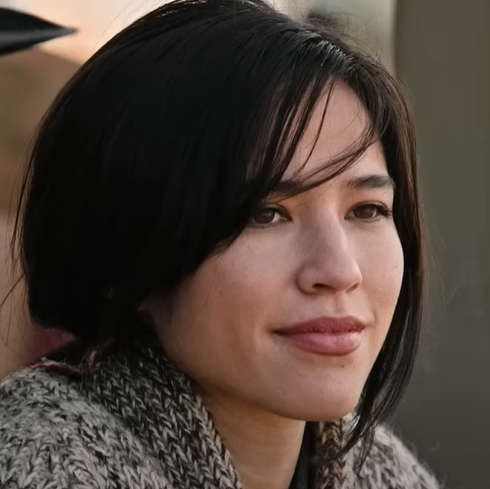
Monica’s attempts to understand this alien world are met with a mixture of deflection and stark revelation. Her innocent questions about the ranch’s mysterious “brand” – a mark of loyalty and a second chance – are initially dismissed by John. When Beth, ever the blunt force, interjects, her explanation is chillingly clear: the brand signifies a life forever bound to the “family business,” a business conducted with brutal efficiency. “Don’t judge us for the way we protect the thing we’re giving you,” Beth warns, her words a chilling premonition of the violence to come. Monica’s confusion deepens; she finds herself lost in the sprawling house, grappling with a sense of isolation and burgeoning fear. Kayce, ever her anchor, implores her to trust him, to believe that he is doing what’s best. Yet, Monica’s doubts are not easily quelled. The ranch, once a distant, abstract concept, transforms into a tangible threat. Her desperate lie about a “field trip” on a holiday – a desperate attempt to distance herself from the ranch’s shadow – highlights her growing unease.
The pivotal turning point in Monica’s journey is her stark realization: “This place isn’t a home, Kayce. It’s a giant Alamo.” She articulates the grim truth that has long eluded Kayce: they are prisoners, bound by the land and the endless war to protect it. Her impassioned plea to escape, to return to a simpler life in town, stems from a primal need to shield her family from the omnipresent conflict. Kayce, torn between his love for Monica and his innate connection to the land, offers to leave. For a brief moment, a glimmer of hope appears.
Then, the world shatters. The coordinated, brutal attacks on the Dutton ranch – a harrowing night of gunfire, explosions, and home invasion – irrevocably scar Monica and Tate. The terror of that night, Monica’s desperate fight for her son’s life, and her subsequent discovery of an assailant she herself kills, leaves her broken. The trauma is visceral, manifesting in Tate’s withdrawal and Monica’s raw, unfiltered rage. “I begged you not to bring us here,” she screams at Kayce, blaming him, blaming the ranch, declaring them all “evil.” It is a moment of profound despair, a reflection of the deep psychological wounds inflicted by the Dutton world. Yet, even in this abyss of hatred, her enduring love for Kayce shines through. When he presses her, she admits, “If I hated you, I would’ve left.” This simple statement encapsulates the profound, unbreakable bond that ties her to Kayce, and by extension, to the very place she despises.
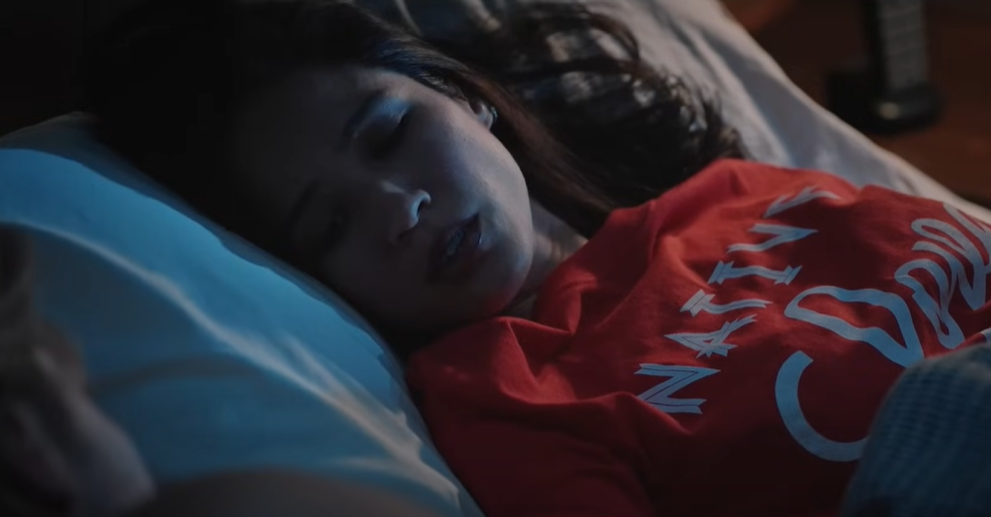
The immediate aftermath sees Monica and Tate seeking refuge at her grandfather Felix’s home on the Broken Rock Reservation. This return to her roots is a poignant turning point. Here, away from the ranch’s constant tension, Monica and Tate begin to heal. The simple rhythms of reservation life, the sense of community, and the quiet comfort of family provide a much-needed balm for their traumatized souls. Tate, initially withdrawn, slowly re-engages with the world, finding joy in a new dog and the peaceful expanse of his ancestral land. Monica, too, finds a semblance of peace, reflecting, “I like it here… It just feels like home.” This period of respite offers a stark contrast to the relentless chaos of the ranch, solidifying Monica’s conviction that the reservation, not the Dutton spread, is where her family truly belongs.
However, tragedy strikes again, uniting Monica with John Dutton in a way neither could have foreseen. The devastating loss of their unborn son, John IV, for “an hour anyway,” is a shared grief that transcends their differences. In a rare moment of profound vulnerability and unexpected empathy, John Dutton approaches Monica. He recounts the quiet, lifelong pain of losing his own infant brother, Peter. His words are a balm, a testament to a universal truth: “Peter lived a perfect life, all he saw of this planet was you. And all he knew was you loved him.” This shared moment of raw grief and unexpected comfort marks a subtle but crucial shift in Monica’s perception of John and, by extension, the ranch. It reveals a hidden depth to the seemingly hardened patriarch, a shared humanity beneath the gruff exterior.
This new understanding, born of shared sorrow, paves the way for a crucial offer. As John prepares to leave for Helena and Rip leads the cattle to Texas, he finds himself in need of capable hands to oversee the sprawling ranch. He approaches Monica directly, acknowledging her influence over Kayce: “I got something to ask Kayce, but we both know who wears the pants in your deal, so I’m just gonna cut out the middleman and ask you.” He offers them the East Camp house, an older property on the ranch, contingent on their help. Monica, leaning on John’s earlier words of comfort, accepts. Her decision is not born of a sudden love for the ranch, but a profound need for a new beginning, a space of their own, and a fresh start for her family. “I don’t wanna go back to a rented house and stare at a nursery that isn’t filled,” she confesses to Kayce. Her desire to “start over and try again,” to build a new life in a place that is *theirs* rather than *theirs to fight for*, becomes her driving force.
The East Camp represents a compromise, a hybrid existence that allows Monica and Kayce to remain connected to the Dutton family while carving out their own space, their own version of “home.” It’s a place where they can raise Tate, a place where they can potentially heal and grow their family without being fully consumed by the ranch’s perpetual war. Monica’s journey is far from over, but her evolution from reluctant outsider to an integral, albeit still distinct, part of the Dutton family saga is a testament to her strength, her love, and her unyielding spirit. She is not merely a bystander; she is a force of change, slowly, subtly, reshaping the very definition of family and home within the unyielding world of the Yellowstone Dutton Ranch. Her continued presence ensures that the “apple cart,” once overturned, remains perpetually tilted, forcing the Duttons to confront a future far different from the one John ever envisioned.