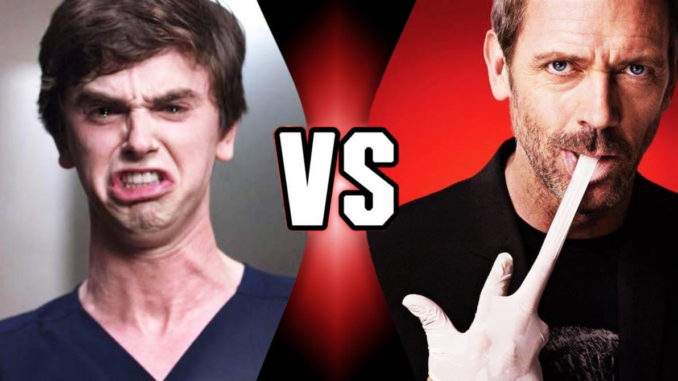
Ever since The Good Doctor premiered, comparisons with other medical dramas have been unavoidable. But no comparison sparks more debate than this one: The Good Doctor versus House, M.D.. On the surface, both shows center on brilliant doctors who don’t fit the mold — yet the way they tell their stories couldn’t feel more different.
And that difference is exactly why fans are split.

Genius Doctors, Opposite Emotional Cores
Both Shaun Murphy and Gregory House are medical prodigies, but their journeys move in opposite emotional directions.
House, M.D. builds its identity around cynicism. Dr. House challenges morality, mocks empathy, and treats medicine as an intellectual puzzle first, human experience second. Patients are problems to be solved — emotions are optional.
The Good Doctor, on the other hand, does the reverse. Shaun’s brilliance is inseparable from his empathy. Every diagnosis is tied to emotional growth, connection, and vulnerability. The show consistently asks not “What’s the smartest solution?” but “What’s the most human one?”
Tone: Dark Wit vs. Emotional Optimism
One of the biggest contrasts lies in tone.
House thrives on sarcasm, moral ambiguity, and uncomfortable truths. It rarely offers comfort — and that’s the point.
The Good Doctor leans into hope. Even at its darkest, it believes in progress, healing, and change. Critics sometimes argue this makes the show “too soft,” while fans insist that emotional sincerity is exactly its strength.
It’s less about shock value — more about emotional payoff.
Character Growth vs. Static Brilliance
Another key difference: evolution.
Dr. House famously resists change. His refusal to grow is central to the show’s philosophy — brilliance doesn’t require emotional maturity.
Shaun Murphy, however, is defined by growth. Over the seasons, The Good Doctor emphasizes personal milestones: relationships, leadership, independence, and self-acceptance. Medicine becomes a backdrop for a coming-of-age story.
This approach resonates deeply with viewers who value long-term emotional arcs over episodic cleverness.
Why the Comparison Still Matters
The debate isn’t really about which show is “better.” It’s about what audiences want from a medical drama.
• Fans of House admire its sharp writing and intellectual edge.
• Fans of The Good Doctor connect with its heart, representation, and emotional honesty.
Both succeed — just in very different ways.
Final Verdict
If House, M.D. is a medical drama about brilliance without compromise, The Good Doctor is a story about brilliance learning how to connect. One challenges viewers intellectually. The other challenges them emotionally.
And that’s why, years later, the comparison still sparks debate — because both shows reflect two very different ideas of what it means to be a great doctor.