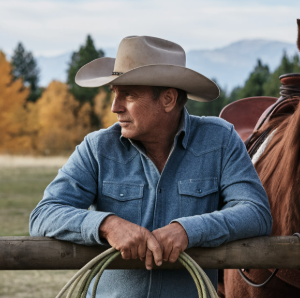
From the moment its iconic title sequence graces our screens, Taylor Sheridan’s Yellowstone has captivated audiences with its raw portrayal of the American West, blending breathtaking landscapes with cutthroat family drama. At its heart lies John Dutton, played with a granit-like intensity by Kevin Costner – a man whose very existence is inextricably linked to the sprawling Yellowstone Dutton Ranch, the largest contiguous ranch in the United States. While the series is renowned for its intricate political machinations, brutal power struggles, and searing family dynamics, some of its most potent moments are found in the simplest, most visceral conflicts. One such early, defining scene from Season 1, etched into the collective memory of fans, pits the unflappable ranch patriarch against a group of unassuming, yet dangerously oblivious, tourists. It’s a confrontation that not only underscores John Dutton’s unyielding character but also encapsulates the fundamental ideological battleground upon which the entire series is built.
A Serene Landscape, A Looming Threat
The scene opens with a jarring screech of tires, a sudden disruption of the tranquil Montana wilderness. A vehicle, clearly out of its depth, has veered too close to a primal force of nature: a formidable grizzly bear. The tourists, a group of foreign visitors, are not merely observing the apex predator from a safe distance; they are dangerously encroaching, their faces alight with a mixture of curiosity and a staggering lack of understanding. A woman speaks excitedly in a foreign language, her voice light and unburdened by the gravity of the situation. The bear grunts, a low, guttural sound that serves as a visceral reminder of its untamed power. It’s a tableau of idyllic ignorance meeting deadly reality.
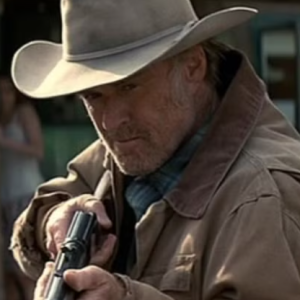
Enter John Dutton. His arrival is not heralded by fanfare, but by the grounded, deliberate cadence of a man who belongs to this land as much as it belongs to him. “The fuck?” he utters, his voice a low growl, instantly establishing his irritation and his instinctive judgment of the situation. He surveys the scene: the precarious vehicle, the oblivious tourists, and the menacing proximity of the bear. His immediate instinct is not about ownership, but about safety. “Hey. Hey! Hey! You outta your mind? Get back. Get back, alright. Get back before that thing eats somebody.” His commands are sharp, direct, born of a lifetime spent navigating the delicate balance between man and beast in a land that brooks no fools.
The Naiveté of the Outsider vs. The Wisdom of the Wild
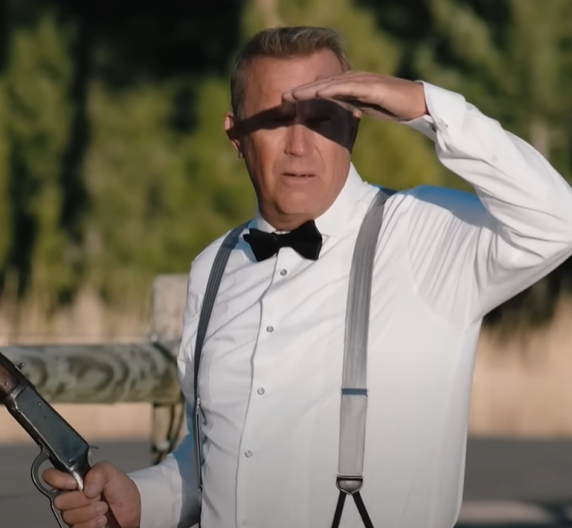
But the tourists, steeped in an urban sensibility that has long forgotten the true wilderness, are dismissive. “It seems friendly,” one suggests, a statement so laughably naive it borders on the suicidal. “Well it’s not, now get back,” John retorts, his patience visibly thinning. “We won’t get any closer,” another promises, their words betraying a profound misunderstanding of both the bear’s unpredictable nature and John Dutton’s resolute authority. They are trespassers not just on his land, but on his very way of life, casually dismissing his warnings with a blend of arrogance and ignorance that is deeply offensive to a man of the land.
This initial exchange sets the stage for the true conflict: not just man vs. bear, but John Dutton’s ingrained respect for the perilous natural world against the modern, diluted understanding of it. He sees danger where they see a photo opportunity. He understands survival where they seek entertainment. This fundamental divergence of perspective is the spark that ignites the broader ideological clash.
The Declaration of Sovereignty: “This Land is Mine”
Having dealt with the immediate threat of the bear – or at least, tried to – John shifts his focus to the deeper transgression: trespass. His voice drops, laden with generations of claim and struggle. “You see that fence, that’s mine. That fuckin’ fence down there, that’s mine too. Everything this side of that mountain all the way over to here, mine too. You’re trespassin’. Trespassin’.” He punctuates his words with a chilling repetition, his gaze unwavering, driving home the absolute, undeniable truth of his ownership.
This is more than just a property dispute; it’s a declaration of sovereignty. The Yellowstone Dutton Ranch isn’t just a plot of land to John; it is his heritage, his identity, his very soul. It represents the sweat and blood of his ancestors, the legacy he is determined to protect at all costs, against all comers. Every acre, every mountain peak, every fence post is imbued with a sacred significance. For someone to casually disregard these boundaries is not just an inconvenience; it is an existential threat. It’s an insult to everything he stands for, everything his family has fought and bled for across generations. The fences are not merely physical barriers; they are philosophical lines in the sand, demarcating a world where private property is sacrosanct and the rule of law – as defined by John Dutton – reigns supreme.
A Clash of Worldviews: American Individualism vs. Global Communalism
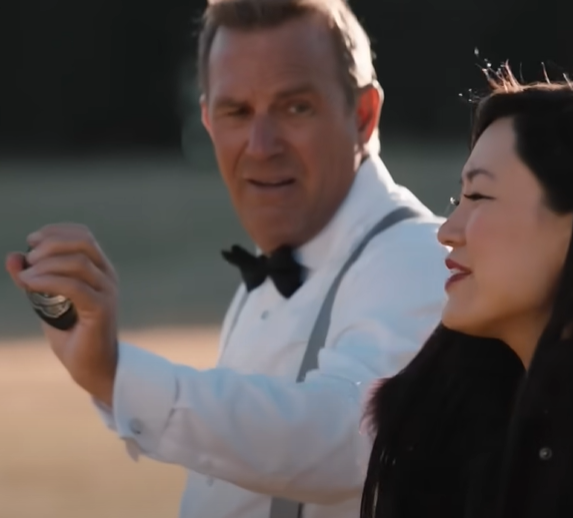
The conflict escalates as the language barrier morphs into a barrier of fundamental beliefs. The tourists, speaking in their foreign tongue, clearly do not comprehend the gravity of John’s assertion. A translator steps forward, bridging the linguistic gap only to reveal a deeper, unbridgeable chasm of ideology. “They don’t believe you,” the translator states, almost apologetically. “What? What’s he sayin’? What’s he sayin’?” John demands, his frustration mounting. The answer, when it comes, is a direct challenge to the very foundation of his existence: “He says that it’s wrong for one man to own all this. He says you should share with all the people.”
This is the pivotal moment, the ideological crucible. The tourists represent a more global, possibly European, perspective – one that might view vast private land ownership as an anachronism, perhaps even an injustice. They advocate for a communal understanding of resources, a belief that such beauty and space should be accessible to all. To John Dutton, this notion is not just foreign; it is anathema. It strikes at the heart of the American ideal of rugged individualism, of the right to own and defend one’s property. It negates the pioneering spirit, the very concept of carving out a domain through hard work and sheer will. For them, it’s a philosophical discussion. For John, it’s a direct assault on his family’s legacy and the core tenets of his life.
The Echo of a Rifle: “This is America. We Don’t Share Land Here.”
The tension becomes unbearable. John’s eyes narrow, his jaw clenches. His response is swift, brutal, and unequivocally Dutton. The sharp crack of a rifle shatters the air, followed almost immediately by another. The sound is deafening, a shockwave that sends the bear bolting and the tourists screaming in terror. These are not shots fired to wound, but to warn, to dominate, to instill fear. They are an exclamation mark on his assertion of power and ownership.
Then, with the thunderous echoes still reverberating through the valley, John Dutton delivers his iconic line, a declaration that reverberates through the entire series: “This is America. We don’t share land here.”
This simple, chilling sentence is a thesis statement for Yellowstone. It’s a defiant roar against encroaching modernity, against changing societal norms, against any challenge to his dominion. It encapsulates the uncompromising ethos of the Dutton family: their land is their identity, and they will defend it with every fiber of their being, by any means necessary. It’s a statement of absolute, unyielding sovereignty, a testament to the fact that in John Dutton’s world, the rules are his, and the consequences for breaking them are severe. The incident with the tourists is not just a minor skirmish; it is a microcosm of the larger war John wages against developers, politicians, and Native American tribes – anyone who dares to covet a piece of his land.
A Defining Moment for a Patriarch and a Series
This early Season 1 encounter is more than just a dramatic scene; it’s foundational to understanding John Dutton and the world of Yellowstone. It immediately establishes him as a complex, dangerous, yet undeniably compelling anti-hero. It shows his deep-seated connection to the land, his unwavering belief in his rights, and his willingness to employ extreme measures to protect his empire. The tourists, meanwhile, serve as a stark reminder of the disconnect between the pristine, romanticized image of the West and its brutal, unyielding reality.
The scene perfectly sets the tone for the series: a constant battle for survival, for legacy, for the very soul of the American West. It’s a place where majestic beauty coexists with raw violence, where principles are as unyielding as the mountains themselves, and where the land is always, always worth fighting for. It’s a powerful invitation into the high-stakes world of the Duttons, leaving viewers no doubt about the kind of man John Dutton is, and the relentless battles he will face to preserve his way of life.
Catch up on Yellowstone season 1 now on paramountnetwork.com or the app.