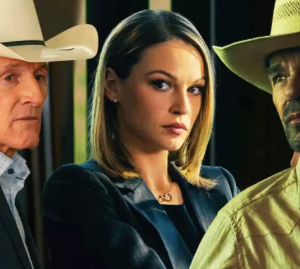
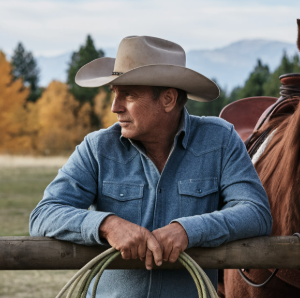
In the rugged, unforgiving landscape of Montana, where the Yellowstone Dutton Ranch stands as a testament to legacy and stubborn will, no battle rages more fiercely than the internecine war between Beth Dutton and her adopted brother, Jamie. More than mere sibling rivalry, their dynamic is a catastrophic collision of trauma, ambition, and a venomous hatred that gnaws at the very soul of the Dutton family. Paramount Network’s “Yellowstone” has masterfully crafted this relentless feud, presenting it not just as a side plot, but as a central, terrifying artery pumping darkness through the series. This isn’t just about land or loyalty; it’s a visceral fight for dominion, forgiveness, and ultimately, survival.
The chilling core of their conflict was perhaps most starkly articulated in a barn, under the weight of an unspoken history. Beth, a woman forged in fire and hardened by unforgivable betrayals, leveled an accusation at Jamie that transcended mere insult: “Cancer, what it is, essentially is the body’s cells so deformed they turn on the body itself and start feeding. Cancer doesn’t have much foresight, so it kills its host, which kills it. Cancer is suicide from the inside out. That’s who you are, Jamie.” The brutality of the metaphor was designed not just to wound, but to utterly dehumanize. Jamie, ever the one to deflect, dismissed it with a feigned casualness, “Wow, that’s really deep, Jamie. You must be watching TED Talks on YouTube.” But Beth’s intent was clear: Jamie was a disease, a cancerous growth threatening to consume the very family he claimed to protect, and she, Beth, was the radical surgery needed to excise him.
Jamie’s inherent weakness and desperation for external validation have always been kindling for Beth’s fire. His foray into politics, a bid for the Attorney General’s office, was another battlefield. Beth saw it not as ambition, but as a pathetic grab for identity. Her assessment was scalding: “You’re not a politician, okay? Politicians believe that they can manage people’s lives better than they can. The best politicians are narcissists. The very best should probably be committed. You aren’t that. Let’s be honest, you don’t know who the fk you are, and you’re looking for the world to tell you.” This wasn’t merely a critique of his political acumen but a surgical dissection of his soul. Beth knows Jamie’s deepest insecurity – his constant quest for John Dutton’s approval and his own self-worth – and she exploits it with surgical precision, predicting his downfall with chilling accuracy: “You reek of desperation, and they can smell it. They will pull you, they will twist you and they will tear you into tiny pieces, and our father with you.” For Beth, Jamie’s attempts to establish himself outside John’s shadow are doomed to fail because he lacks the moral compass and conviction necessary for true power, a failing she relentlessly attributes to his fundamental brokenness.
Beyond the personal attacks, their conflict frequently spills into the Yellowstone’s very existence. The ranch, a symbol of everything the Duttons fight for, becomes a pawn in their power games. When Jamie, acting as Chief Council, questioned Beth’s decision to invest a substantial portion of the ranch’s cash into Market Equities, the financial future of the 200,000-acre property hung precariously in the balance. Jamie’s concern over a $5 million investment – “That is over half the ranch’s cash! What are we going to do in November if cattle prices go down?” – was met with Beth’s characteristic contempt. She lambasted his perceived cowardice, ridiculing his “balls the size of quail eggs,” and twisting the knife by revealing the ranch’s dire financial state: “This ranch has not turned a profit in six years.” Beth’s brazen financial maneuvers, and her readiness to risk everything, underscored her willingness to gamble the family’s inheritance on her own terms, directly challenging Jamie’s authority and judgment, further eroding his sense of purpose within the Dutton empire. Her audacious play with Market Equities wasn’t just about money; it was a move to seize control, a declaration that she, and only she, held the reins of the ranch’s destiny.
The very notion of “family” becomes a weapon in their arsenal. When Jamie, in a rare moment of desperation, pleads, “I need you to forget about how we feel about each other and remember one thing: we’re family,” Beth’s response is a guttural roar of pure disillusionment. “I love how people think that word entitles them to absolution from the people whose lives they ruin! We owe you nothing!” This exchange cuts to the heart of Beth’s deep-seated resentment. For her, the word “family” is no shield for Jamie; it’s a constant reminder of the pain he inflicted, absolving him of nothing. It underscores the horrific weight of their shared past, a past Beth never lets Jamie forget, and one that ultimately defines their every interaction.
And then, there’s the trauma. The unspoken, yet ever-present, wound that fuels Beth’s relentless torment of Jamie: her forced hysterectomy. This horrifying event, orchestrated by Jamie as a teenager to cover up Beth’s pregnancy, ripped away her ability to have children, irrevocably shattering her future and her spirit. When Beth, in a moment of raw, searing agony, finally throws the accusation, “I didn’t ask you for a fking hysterectomy!” the audience is confronted with the true genesis of her boundless rage. Jamie’s feeble, self-serving justification—”you know, when you consider the pain that you cause a person, the person’s fault, that’s evil”—only intensifies Beth’s disgust. This single act is the wellspring of her malice, transforming her into the vengeful force she is today. It’s the unforgivable sin, the ultimate betrayal that renders any attempt at familial reconciliation utterly impossible.
The aftermath of the coordinated attacks on the Duttons further ignited Beth’s inferno of vengeance. After weeks of praying for her father’s survival and Jamie’s conspicuous absence, Beth confronts him, the air thick with unspoken accusation. “It was you, wasn’t it?” she demands, her eyes blazing with an almost supernatural fury. While Jamie denies direct involvement, Beth’s conviction is unshakeable, leading to one of the series’ most chilling threats: “I’m going to kill you, Jamie. I’m going to fking kill you for what you did to my family. Think hard about what you’re saying, Beth, you’re threatening a state official.” Beth’s response, dripping with contempt, leaves no room for doubt: “I am threatening the whole fking state.” This isn’t empty rhetoric; it’s a promise, born of a deep-seated desire for retribution that transcends legal consequences. She waited, she prayed, and now, fueled by John’s survival and Jamie’s perceived culpability, her thirst for blood is absolute.
The final, devastating blow in this particular chapter of their feud came as Beth orchestrated her ultimate power play: becoming the head of operations for Market Equities. Jamie, bewildered by her presence in the corporate boardroom, asks, “Fk! What the fk are you doing here?” Beth’s answer is a triumphant, terrifying declaration of intent: “My doobie.” And then, a warning that shakes Jamie to his core: “You ever hear the saying, wherever something good is trying to happen, something bad is trying to stop it? I’ve heard it. I’m something bad.” This strategic masterstroke ensures that Beth is no longer just defending the ranch; she is infiltrating the enemy from within, transforming herself into the very force that threatened them. Her chilling promise, “You’re going to run everything, aren’t you? Everything,” cements her dominance and outlines a future where Jamie, and perhaps even the Duttons themselves, will be subject to her calculated, ruthless will.
The Beth and Jamie dynamic is a masterclass in sibling animosity, a raw, unflinching portrayal of how deep-seated pain and betrayal can fester into an all-consuming hatred. Jamie’, constantly seeking validation and belonging, is forever caught in Beth’s orbit of destruction, a man whose every attempt at self-actualization is met with her vengeful scrutiny. Beth, on the other hand, is a force of nature, a woman whose life was irrevocably altered by Jamie’s actions, now committed to making his life a living hell. Their feud is more than just a plot device; it’s a poignant exploration of loyalty, family, and the irreparable damage that even the closest bonds can inflict. As “Yellowstone” continues, the question isn’t if Beth will finally break Jamie, but what scorched earth will be left behind when she finally does.