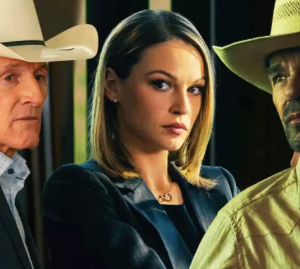
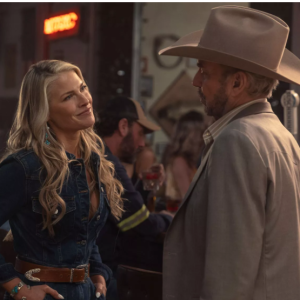
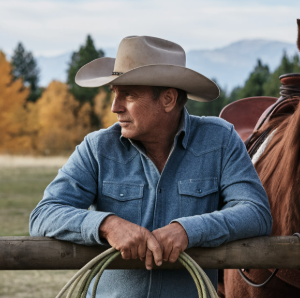
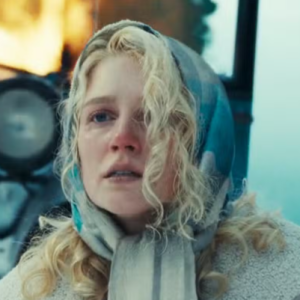
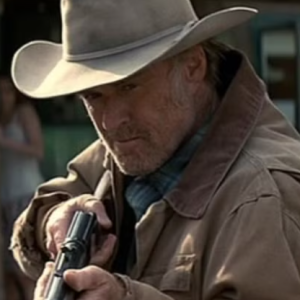
From the sweeping, unforgiving landscapes of the Montana frontier, Taylor Sheridan’s “1923” carved out a new chapter in the epic Yellowstone saga, introducing audiences to the formidable patriarch, Jacob Dutton. Portrayed with a grizzled majesty by the incomparable Harrison Ford, Jacob is more than just a rancher; he is the very embodiment of a vanishing way of life, a sentinel guarding the land his family spilled blood to claim. As the series unfolded, Jacob faced a relentless barrage of threats – from the harsh elements and desperate neighbors to the insidious creep of modernity and corporate greed. Here, we delve into the moments that defined Jacob Dutton, showcasing his unwavering resolve, his profound wisdom, and the indomitable spirit that made him the beating heart of the Dutton legacy.
The Shepherd’s Bane: Upholding the Law of the Land
From his very first appearance, Jacob Dutton establishes his authority not just as a ranch owner, but as a moral compass for his community. His initial confrontation with the struggling sheepherders, led by the volatile Banner Creighton, immediately sets the tone. “You grazed down all your grass and you push your flock out of another man’s grass,” Jacob declares, his voice a low rumble of absolute certainty. This isn’t just about property lines; it’s about the delicate balance of the ecosystem and the unwritten rules of the frontier. When Creighton invokes the devastating locust plague, Jacob’s pragmatism shines through: “Take your flock higher then it’s bears killing them instead of cowboys.”
This early interaction highlights Jacob’s fundamental belief system: responsibility, self-reliance, and the sanctity of a man’s earned sustenance. He is a man of his word, and his threats are promises. “You graze another man’s lease again and I’ll have your whole flock and I’m a man of my word.” This pronouncement, delivered with quiet intensity, is a chilling testament to his commitment to justice, even if it is a justice he himself dispenses. He understands the desperation that drives men like Creighton, but he cannot allow it to destabilize the fragile order he strives to maintain. This conflict is the genesis of a blood feud that would define much of Jacob’s struggle throughout the season, establishing Banner Creighton not merely as an antagonist, but as a direct challenge to Jacob’s very definition of the Montana way of life.
The Mirror’s Reflection: A Patriarch’s Private Struggle
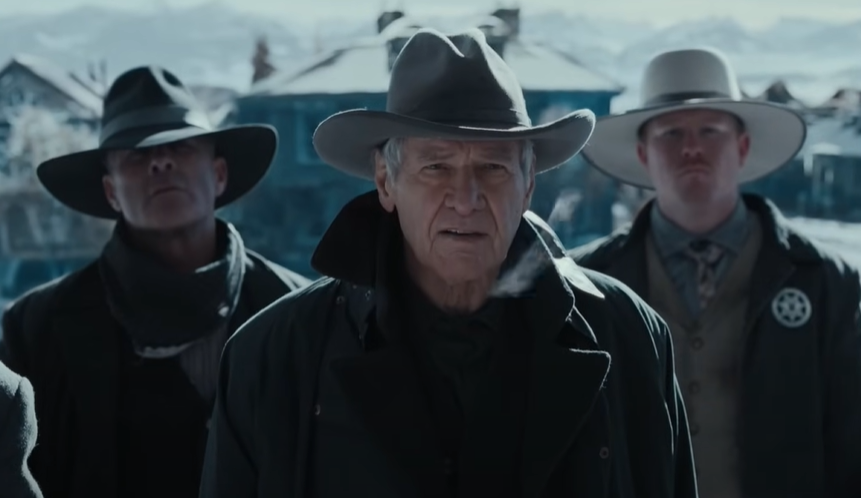
Amidst the external pressures, “1923” offers profound glimpses into Jacob Dutton’s internal world. One particularly poignant scene finds him staring into a mirror, a moment of profound, quiet introspection. “Who this old man is staring at me in the mirror?” he muses aloud, a rare admission of vulnerability. “When the hell did that happen? Never seen that man before.” This moment reveals the private toll of a life lived on the edge, a lifetime of battles etched onto his face. It is a stark reminder that even the most formidable figures grapple with their own mortality and the relentless march of time. This scene serves as a quiet foreshadowing, preparing the audience for the immense physical and emotional trials that lie just ahead, emphasizing that even a titan like Jacob Dutton is not immune to the weariness of age.
A Torrent of Lead: The Ambush and Its Aftermath
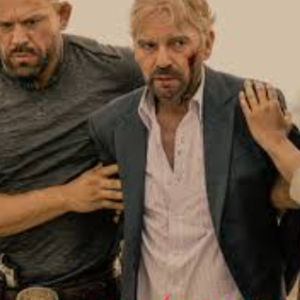
The relative peace of the ranch is shattered in a brutal ambush, a pivotal event that reshapes the Dutton family’s immediate future. Banner Creighton, driven by vengeance for his imprisoned shepherds, unleashes a hail of gunfire upon Jacob, John Dutton Sr., and their ranch hands. The scene is a harrowing masterclass in cinematic tension, as the family fights desperately for survival. Jacob, despite his age, is a warrior, barking orders, returning fire, and embodying the fighting spirit that defines the Dutton lineage.
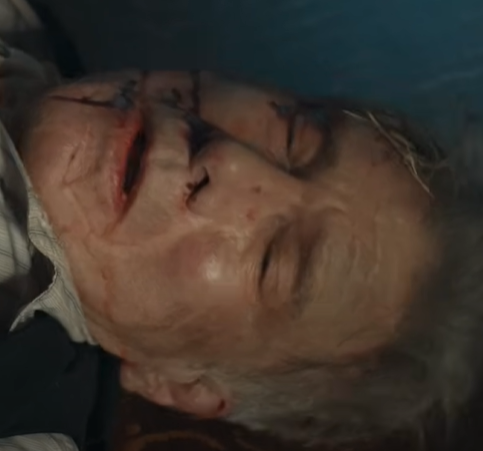
But even a legend can fall. Jacob takes multiple bullets, a seemingly fatal blow that sends shockwaves through the family. The immediate aftermath is a visceral portrayal of desperation and resilience. His wife, Cara Dutton (Helen Mirren), emerges as an equally powerful force, her grief quickly hardening into steely resolve. With no time for formal medical care, she leads the makeshift surgery, her voice a calm anchor amidst the chaos, urging Jacob to “Press hard, Jake, you’re gonna be fine.”
The decision not to involve the sheriff – “No sheriff! If they found out what they’ve done to me, they’ll come for this place. The banks, the miners, the thieves… No sheriff!” – is a quintessential Dutton moment. It underscores their deep-seated distrust of external authority and their unshakeable belief in self-preservation, a philosophy echoed throughout the Yellowstone universe. This brutal attack, far from breaking Jacob, transforms him. It ignites a primal need for vengeance and solidifies his conviction that the Duttons must stand alone. It is also the catalyst for the desperate summons of Spencer Dutton from Africa, setting in motion a long-awaited reunion and the hope for the family’s future.
The Weight of Leadership: Cara’s Unsung Strength
During Jacob’s agonizing recovery, the true strength of his partnership with Cara comes to the fore. As Jacob hovers near death, his mind still tethered to the fate of his ranch, he asks, “What would you do? Guide me, Mother Mary, guide me… We have no leader.” Cara’s response is immediate and unequivocal: “You be the leader. You will be the leader.” This exchange highlights her profound respect for him, but also her own formidable resolve. When faced with cattle theft, it’s Cara who weighs the cost of lives against property, choosing survival above all: “It’s only lives we can’t afford to lose. No fighting till Spencer gets here. Let the cattle go.”
Cara becomes the de facto matriarch, shouldering the immense burden of ranch management and navigating the treacherous waters of local politics while Jacob recuperates. Their dynamic is one of deep trust and mutual respect, a testament to a lifetime of shared hardship and unwavering devotion. Jacob’s eventual return to some semblance of health is partly due to Cara’s relentless care and fierce will, solidifying her status as his indispensable partner and a force in her own right.
Frontier Justice vs. The Modern World: Banner Creighton’s Reckoning
Jacob’s recovery culminates in a decisive confrontation with Banner Creighton, showcasing his blend of strategic cunning and ruthless frontier justice. Having survived his near-fatal wounds, Jacob leads his men to arrest Creighton, not for murder, but for the numerous cattle thefts that have plagued the region. This masterstroke reveals Jacob’s understanding of the changing legal landscape, recognizing that direct retribution, while satisfying, would be detrimental in the evolving world.
The courtroom scene is a charged spectacle, where Jacob’s testimony, supported by “a dozen witnesses,” paints Creighton as a cattle thief, not a murderer – a carefully orchestrated narrative to ensure a legally sound conviction. Creighton’s enraged outburst in court, revealing Jacob’s earlier, extralegal punishment (“This fing jackal hung me by my neck!”), only further solidifies Jacob’s powerful, if unconventional, authority. He is a man who operates within his own moral code, and while it might clash with established law, it serves his purpose of protecting his family and their land. This confrontation also subtly introduces the sinister shadow of Donald Whitfield, hinting at a deeper conspiracy.
The True Adversary: Donald Whitfield’s Corporate Onslaught
The season’s culminating confrontation reveals the true, insidious nature of the threat to the Duttons: Donald Whitfield, a ruthless mining magnate. Whitfield represents the dawn of a new, corporate-driven era, where money and legal loopholes replace physical might. His chilling declaration, “The word decent doesn’t apply to me,” is a stark contrast to Jacob’s code of honor.
Whitfield’s strategy is methodical and devastating: acquiring land around the ranch to control water sources, exploiting legal technicalities like property taxes to seize deeds, and deploying political influence to consolidate power. He reveals his vision for Montana’s future: not cattle or mining, but tourism, capitalizing on the scenic beauty the Duttons have fought for generations to preserve. “Our boom will be land,” he states, a chilling prophecy for the coming decades.
This final confrontation with Whitfield leaves Jacob facing his most formidable challenge yet. It’s not a fight he can win with a gun or a rope; it’s a battle against an abstract force, a system designed to dispossess. Jacob, the aging lion, is forced to confront the harsh reality that his traditional methods may no longer suffice against an enemy who plays by a different set of rules.
The Enduring Legacy
Jacob Dutton’s journey in “1923” is a powerful testament to the enduring spirit of the American West. Through hardship, loss, and the relentless march of progress, he stands as an unyielding sentinel, a man who understands that the fight for land is a fight for identity. Harrison Ford’s portrayal elevates Jacob beyond a mere character; he is an archetype, a symbol of resilience in the face of insurmountable odds. His wisdom, his unshakeable integrity, and his fierce devotion to his family have cemented his place as a cornerstone of the Dutton saga, reminding audiences that some battles, and some men, refuse to surrender. The legacy of Jacob Dutton is not just etched into the soil of the Yellowstone ranch, but into the very fabric of American storytelling itself.