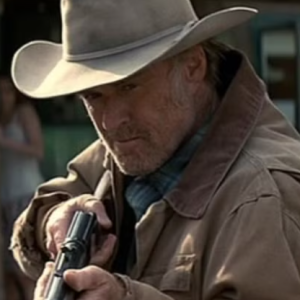
From the sun-baked plains of Montana to the shadowed valleys of the Dutton ranch, one figure stands as an enduring testament to loyalty, sacrifice, and the brutal poetry of the American West: Rip Wheeler. Played with stoic intensity by Cole Hauser, Rip is more than just John Dutton’s right-hand man; he is the Yellowstone’s beating heart, its unflinching shield, and the quiet keeper of its darkest secrets. An enigma wrapped in denim and grit, Rip’s journey on *Yellowstone* is a masterclass in character development, showcasing a man forged in fire who finds his truest purpose in the defense of an unconventional family and a sprawling legacy.
**The Enforcer: Brutality Born of Loyalty**
From his very first appearances, Rip established himself as the ultimate enforcer of the Dutton Ranch’s unwritten, often violent, code. His actions are not merely a job; they are a sacred duty, reflecting an unwavering commitment to John Dutton and the very soil they stand upon. One pivotal scene indelibly etches this into the viewer’s mind: the brutal confrontation where Rip intervenes to protect a newly branded Jimmy Hurdstram from the malicious Fred.
“What’s the rule about fighting, Fred? You wanna fight somebody, you come fight me!” Rip’s voice, low and menacing, cuts through the tension as he unleashes a visceral fury. The whiplash crack of leather, the swift, decisive violence – it’s a chilling reminder of the consequences for those who violate the ranch’s sacred laws, particularly against a “branded man.” The brand, a permanent mark of allegiance and servitude, signifies not just ownership, but an unbreakable bond of brotherhood under Rip’s watchful eye. He swiftly dismisses Fred, declaring with chilling finality, “If you ever hit a branded man again, I will kill you, Fred.” This moment isn’t just about discipline; it’s a profound statement on family. “These guys, they just work here, Jimmy,” Rip later explains, his voice softening with paternal authority. “You’ll see 1,000 of ’em come and go, but not us. We die here. This is your family. We’re your family.” It’s a baptism by fire, a forced acceptance into the fold that perfectly encapsulates the Dutton ethos: belong, or be banished. Rip embodies this philosophy, making him indispensable to the survival of the Yellowstone, a living weapon wielded with precision and purpose.
**The Genesis of a Legend: Forged in Fire**
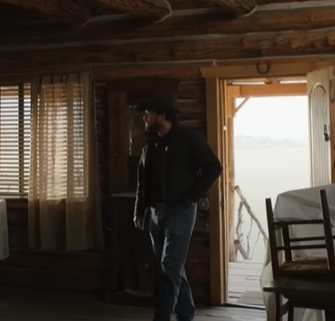
Rip’s unwavering devotion isn’t born of blind faith; it’s a profound debt, forged in the ashes of a tragic past and a life-altering encounter with John Dutton. His origin story, slowly unfurled through flashbacks, is a testament to the transformative power of a single act of kindness—or rather, a lifeline thrown by a man who saw potential where others saw only trouble. A younger, wounded Rip, on the run after committing an unimaginable act of self-preservation against his abusive father, is found by John Dutton.
The initial exchange is terse, charged with mistrust. John, ever the shrewd judge of character, assesses the young man before him. “Those don’t look like drifter hands,” he observes, hinting at a depth beyond the hardened exterior. When Rip, with raw honesty, admits, “All I know is this. I should’ve killed that motherfucker years ago,” Dutton sees not a monster, but a kindred spirit—a soul capable of immense loyalty if pointed in the right direction. John’s offer is simple yet profound: a chance at a new life, a place to belong, but at a price. “Everything you’ve ever been through stays right here. I won’t have it on my ranch. No fighting. And if you steal…” Rip, broken but defiant, interjects, “I don’t steal, sir. I ain’t never started a fight in my life.” The terms are clear: a clean slate, but demanding utter subservience and absolute commitment. “You gotta pay a price if you wanna work for me.” Rip’s response, delivered with a quiet, weary resolve, sealed his fate: “Well, sir, pain I’m used to.” This exchange is the crucible in which Rip Wheeler was forged, transforming a traumatized boy into the legendary, unflinchingly loyal man he is today. It explains the depth of his devotion to John, a man who offered him not just a job, but salvation.
**The Heart of a Cowboy: Love in the Shadows**
Perhaps the most compelling dimension of Rip Wheeler lies in his relationship with Beth Dutton. Their love story is a tempestuous, unconventional, and fiercely passionate affair, devoid of pretense and overflowing with a raw, almost feral devotion. While Beth often pushes boundaries and challenges norms, Rip remains her steadfast anchor, accepting her darkness and illuminating her hidden vulnerabilities. Their moonlit conversations, often under the vast Montana sky, strip away the hardened exteriors they present to the world.
One such poignant exchange reveals the hidden depths of Rip’s personal grief and his unique way of honoring his lost family. Beth, in a rare moment of seeking genuine connection, probes him about how he spends his wages. Rip, initially reluctant to “ruin it with the truth,” eventually bares his soul. He reveals the extravagant sums spent on ornate headstones for his mother and younger brother, a heartbreaking testament to a son and brother forever yearning for closeness with those violently taken from him. But the most shocking, and perhaps most cathartic, revelation is the $5,000 paid to a gravedigger in Forsyth. “He dug up my father, and gave me his bones. And I drove from there, all the way to North Dakota, throwin’ ’em out the fuckin’ window.” It’s an act of visceral, vengeful finality, a purging of the toxic past that shaped him. Beth, in turn, offers her own profound philosophy: “I remember the stories of heaven and hell, in church. Lies, a lot of it. I think heaven’s right here, so’s hell. One person can be walking the clouds right next to someone enduring eternal damnation, and God is the land.” Their shared understanding of life’s brutal beauty, and Beth’s refusal to allow him to voice his love until it truly “saves” her, underscores the raw, unfiltered truth of their bond. Their love is not about romance, but about survival, trust, and a shared understanding of pain.
**Mentor and Family Man: The Unconventional Patriarch**
Beyond his role as enforcer and lover, Rip also reveals a tender, paternal side, particularly in his interactions with Tate, Kayce and Monica’s son. He steps into the void left by Kayce’s struggles, offering guidance and comfort, bridging the gap between generations on the ranch. His lessons are practical, rooted in the land and the animals they tend, but they carry profound metaphorical weight.
Watching Rip patiently teach Tate about breaking wild horses, he explains, “They’re trying to figure out who the boss is… who they can trust. I mean, a tourist will look at a mustang that’s running around… and think that they’re playing. But they’re not playing, Tate. They’re seeing where they stand in the world… and who’s their friend.” This isn’t just about horses; it’s a mirror to the Dutton world, a lesson in finding one’s place and identifying allies. Rip, who himself found his trust in John Dutton, guides Tate through the complexities of a life intertwined with the volatile beauty of the ranch. He shows a patience and wisdom that belie his tough exterior, proving that beneath the grit, there’s a protective instinct that extends to the youngest members of his chosen family.
**The Son John Never Had: A Legacy Earned**
The ultimate validation of Rip Wheeler’s journey on *Yellowstone* arrived in a moment that brought even the stoic cowboy to tears. John Dutton, acknowledging his own dwindling lineage and the sacrifices Rip had made, bequeathed his house to Rip and Beth, accompanied by a letter of profound significance. As Beth reads John’s words, a quiet revelation unfolds: “My great grandfather had a dream. All of his sons on the same road, the same ranch, working toward the same goal. That dream survived 100 years, until me. With me, it died. I didn’t have enough sons. They just kept dying, or quitting.” Then, the words that shattered Rip’s composure: “Then one day, not too long ago, I realized that I have enough sons after all.”
The raw emotion that overcomes Rip, the silent tears streaming down his face as he chokes out, “He called me his son,” is a culmination of decades of unwavering service, brutal loyalty, and quiet suffering. It’s the ultimate acceptance, the final piece of the puzzle that secures his place not just as an employee, but as an integral, beloved member of the Dutton family. This moment elevates Rip from a mere ranch hand to a true heir of the Yellowstone legacy, solidifying his role as the chosen son who will fight tooth and nail for the land and the family he swore to protect.
Rip Wheeler’s journey is a powerful narrative of redemption, a testament to finding purpose in loyalty, and forging family where bloodlines fail. He is the embodiment of the Yellowstone, brutal yet beautiful, unforgiving yet fiercely protective. In a world of shifting alliances and constant threats, Rip remains the unyielding soul of the Dutton ranch, a character who reminds us that even in the darkest corners of human experience, loyalty can be the most profound and enduring love of all.