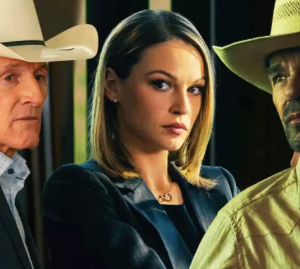
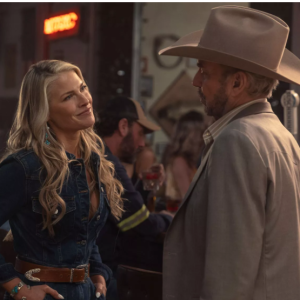
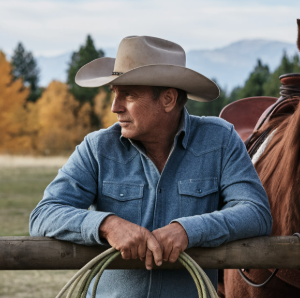
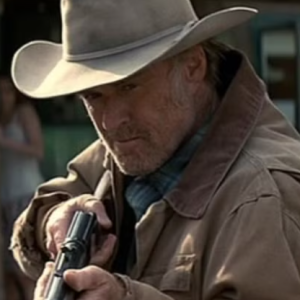
From the shimmering ballrooms of London to the unforgiving vastness of the African plains and the rugged wilderness of the American West, “1923” has plunged audiences into a world of breathtaking beauty and brutal hardship. At the heart of this sweeping Taylor Sheridan epic, a beacon of defiance and burgeoning love, is Alexandra, portrayed with captivating intensity by Julia Schlaepfer. Yet, for Schlaepfer, the journey into the Dutton family’s tumultuous past has been far more than a demanding acting role; it has been a profound, life-altering odyssey that reshaped her understanding of nature, humanity, and her own place in the world.
As “1923” continues to enthrall viewers on Paramount+, Schlaepfer reveals how stepping into Alexandra’s boots irrevocably altered her perspective, fostering an appreciation for the outdoors and the fundamental principles of Western culture that she now carries into her daily life. “Working on ‘1923’ gave me such an appreciation for western culture, our earth, and for animals,” Schlaepfer shares, her voice imbued with genuine reverence. The raw, visceral authenticity of the series is no accident; it stems from the dedication of those who live and breathe the cowboy way of life. Schlaepfer recalls working alongside “incredible wranglers and cowboys and cowgirls that have spent their whole lives working with livestock and horses and farming.” Their deep-seated knowledge, their unwavering love for the land and its creatures, proved infectious. “They have such a knowledge about it and a love for it and I fell in love with it as well.”
The narrative of “1923” itself is an epic testament to the human spirit’s resilience against the elements. Alexandra, a spirited British socialite, abandons a life of privilege and a pre-arranged marriage to follow Spencer Dutton, a haunted veteran of World War I, into a perilous journey across continents. Their odyssey, fraught with unimaginable dangers – from treacherous seas and desperate encounters with wildlife to the constant threat of injury and disease – vividly mirrors the relentless challenges faced by the Dutton patriarch Jacob (Harrison Ford) and matriarch Cara (Helen Mirren) back on the Montana ranch. This immersive experience, both on and off-screen, provided Schlaepfer with a unique window into the sheer effort required to tame and coexist with the wild.
“You see it in the show. You see the animals and you see the land and all the hard work that they put into taking care of these things,” Schlaepfer observes. But to be embedded within that reality, to witness the painstaking labor, the profound respect for the ecosystem, and the sheer grit required to sustain life in such an environment, was a transformative education. “Getting to be a part of that and learn about it is so special and it really brought me back to our roots as humans on this planet Earth and what we can be doing to take care of it, and remember where we came from.” It’s a powerful echo of the Dutton family’s core philosophy: preservation of the land, an inheritance fought for and defended with blood and sacrifice.
The impact of “1923” on Schlaepfer transcended the professional realm, prompting a seismic shift in her personal life. The grandeur of the Montana landscape, so integral to the “Yellowstone” universe, captivated her heart. “Doesn’t look real like I walked into a painting,” she mused, recalling her initial awe. This enchantment led to a dramatic decision: “I moved to Montana after season 1 of 1923 because the second that I got to Montana and saw the beautiful landscape, I couldn’t imagine feeling more at home anywhere.”
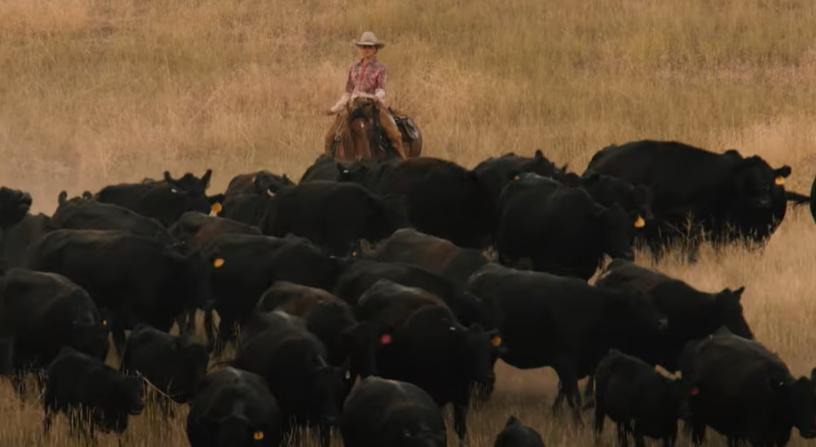
Her journey to Big Sky Country was a stark contrast to her previous urban existence. Growing up in Washington State, Schlaepfer was “very spoiled with how much nature was always around me.” Her twenties, however, saw her drawn to the vibrant, chaotic energy of New York City. While acknowledging the undeniable excitement of city life, she admits, “after a while, it was really hard to live in that environment around thousands of people all the time.” The transition from concrete canyons to sprawling horizons proved to be a balm for her soul. “When I came here and discovered how serene and beautiful it is here and how wonderful the community is, I feel really at peace living here.”
Montana, for Schlaepfer, became an immediate sanctuary. The promise of freedom that Spencer offers Alexandra in the series – “You will be free in a way that most people can barely conceive” – seems to have manifested for Schlaepfer herself. “There are so many beautiful things about living in Montana. I love that nature is just right outside my doorstep. I can step outside and go for a hike or, you know, find a river somewhere, which is so therapeutic.” This direct, unmediated access to the natural world has become an essential component of her well-being. “Spending time outdoors is an absolute gamechanger for my well-being and mental health. I need it. I need to ground myself.”
Among the myriad outdoor activities Montana offers, one stands head and shoulders above the rest for Schlaepfer: horseback riding. Her connection to horses, a cornerstone of the “Yellowstone” saga and the very fabric of Western life, runs exceptionally deep. “My favorite outdoor activity is 1,000% riding horses,” she declares with unwavering conviction. Her adoration for these magnificent creatures is palpable. “They’re the most sensitive, beautiful creatures of all time.” She highlights the therapeutic qualities often associated with equine interaction, noting, “There’s a lot of therapy practices that incorporate horses because of how sensitive they are to human emotions.” For Schlaepfer, the experience is almost spiritual. “I truly feel like if I’m sitting on a horse, it cures all of my problems. So, if I could be on a horse at all times, I would, and I’m working my way towards that because I love them so much.” This profound bond not only reflects the integral role of horses in the Dutton narrative but also underscores the profound solace and understanding they offer in a turbulent world.
The immense popularity of “Yellowstone” and its prequels, “1883” and “1923,” has ignited a widespread fascination with the American West and its stunning landscapes. Schlaepfer believes this on-screen portrayal is cultivating a crucial appreciation for nature among viewers. “I think that so many people are finding a love and appreciation for natural landscapes and nature after ‘1923’ and ‘Yellowstone’,” she reflects. It’s a phenomenon she hopes will endure and deepen. “I really hope that people continue to just fall in love with it.”
The dramatic scope of the Dutton family’s history, stretching from the harrowing journey of their ancestors in “1883” to the Great Depression-era struggles of “1923,” serves as a powerful reminder of humanity’s intrinsic connection to the land. “I think telling the history of the Dutton family in ‘1883’ and ‘1923’ also shows our world and different terrains and how beautiful it is and how important it is to take care of it,” Schlaepfer asserts. It’s a call to action, a plea for mindful engagement with our planet. “You know, much like I did, I hope people continue to visit and explore our world and appreciate it and love it and take it in because sometimes I think it’s easy to take for granted.”
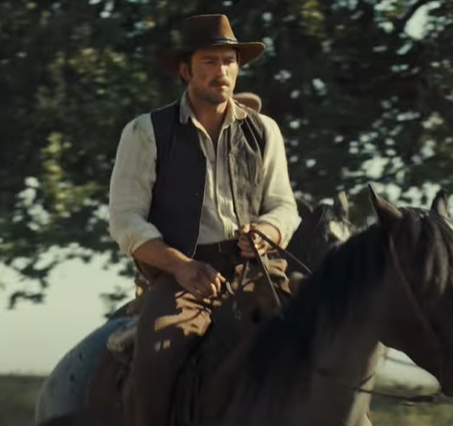
Ultimately, Julia Schlaepfer’s journey with “1923” is a testament to the transformative power of art mirroring life. Her portrayal of Alexandra, a woman who finds her true self amidst the untamed wilderness, has in turn guided Schlaepfer to her own authentic existence in the serene embrace of Montana. It’s a powerful narrative, both on screen and off, reminding us that sometimes, the most profound adventures lead us not across oceans, but back to the wild heart of the land, and to the wild heart within ourselves. As Jacob Dutton famously intones, the fight is for “preservation. I do it for the land. I do it for you.” For Julia Schlaepfer, and for countless viewers, “1923” is doing just that – preserving a legacy, inspiring a connection, and forging a renewed appreciation for the enduring spirit of the American frontier.