In the rugged, unforgiving world of Taylor Sheridan’s “Yellowstone,” few relationships burn with the intensity and complexity of Beth Dutton and Rip Wheeler. Theirs is a bond forged in fire, tested by trauma, and tempered by an unwavering, almost primal, love. While their dynamic often oscillates between fierce protection and volatile confrontation, a singular, profoundly intimate scene ripped through the screen, offering viewers a rare glimpse into Beth’s deepest vulnerabilities and Rip’s boundless capacity for understanding. This pivotal moment, an early morning confession where Beth finally laid bare her guilt-ridden past, stands as a testament to their enduring connection and a turning point in their tortured romance.
The scene unfolds not amidst the usual chaos of the Dutton Ranch, but in the quiet sanctity of their home, an atypical canvas for such raw emotion. The day begins like any other, with the subtle murmur of ranch life stirring outside. Rip, ever the stoic enforcer, is already preparing for a “big day,” his mind on the practicalities of managing the Yellowstone’s vast operations and its demanding livestock. His dialogue about “Sons coming early” and needing a hand “back in hell in there tomorrow” paints a picture of his relentless dedication to the ranch, a dedication Beth understands and, perhaps, relies upon more than she admits. It’s against this backdrop of mundane routine that Beth delivers her bombshell: “I’m sorry.”
Rip’s immediate, almost reflexive reaction is a testament to their history. “What’d you do?” he asks, his tone laced with a mix of weariness and cynical anticipation. For anyone else, such a question might imply a recent transgression. But for Beth and Rip, it carries the weight of years of calculated provocation, self-sabotage, and the emotional wreckage Beth has often left in her wake. Beth’s subsequent explanation – “Nothing recently, but for what I did then. I’m sorry. When then, Beth. This is a sort of blanket apology to generally, you know, cover the past. The past? Yeah. Alright. Like everything before right now. That’s what I’m sorry for” – is a masterpiece of understated anguish. It’s not just an apology for one mistake, but a comprehensive mea culpa for a lifetime of perceived wrongs, particularly those inflicted upon the man she loves most.
This “blanket apology” speaks volumes about Beth’s internal world. Her entire persona is built on an impenetrable shell of aggression and cynicism, a defense mechanism honed over decades of trauma. To admit fault, especially in such an open, unqualified manner, is an act of profound courage for her. It acknowledges the emotional toll her actions have taken, not just on Rip, but on herself. Rip, initially, struggles to process this uncharacteristic vulnerability. His dismissive “Hunny. And I mean this with love, but it’s way too early for this shit” is a classic Rip response, a pragmatic attempt to deflect intense emotion. He’s used to Beth’s theatrics, but this quiet, earnest regret is something different, something disarming.
Yet, Beth persists, pushing through her own discomfort to articulate the depth of her self-loathing. “I was fucking awful to you. I was terrible,” she confesses, her voice cracking with the weight of her words. This isn’t hyperbole; it’s a genuine reckoning. Beth’s past is riddled with instances where she actively pushed Rip away, sabotaged their happiness, and, at times, used him as an emotional punching bag. From her teenage years to their complicated adult romance, her fear of intimacy and her deep-seated belief that she isn’t worthy of love often led her to inflict pain on the very person who offered her unwavering devotion. This confession, however, goes deeper than just her treatment of Rip. “If it is any consolation,” she adds, her voice barely a whisper, “I was worse on myself.”
This line is arguably the most crucial insight into Beth Dutton’s character in the entire series. It explains her self-destructive tendencies, her relentless pursuit of vengeance, and her inability to experience sustained happiness. She carries an immense burden of guilt, not just for the actions she took, but for the choices that irrevocably altered her life and, by extension, Rip’s. The unstated yet heavily implied pain of her inability to have children, a direct consequence of a decision she made as a teenager, hangs heavy in the air. This deep, internal torment is what drives her, shaping her into the formidable, yet deeply damaged, woman viewers have come to simultaneously fear and empathize with. Her cruelty towards others is, in many ways, a projection of the cruelty she inflicts upon herself.
Rip, in his profound wisdom and unique understanding of Beth, cuts through her self-recrimination with a raw, empathetic observation. “You know what your problem is. Is this? It’s almost as big as this. And I’m the only one that knows that you have this. But you do. And baby, it’s big.” He gestures, his hands conveying the immense, unseen weight she carries. This isn’t just about Beth’s rage or her manipulative tactics; Rip is pointing to the deep, festering wound that lies beneath her ferocious exterior. He recognizes her strength, her ferocity – the “this” he gestures to first – but also the equally immense, almost debilitating, internal pain she harbors. That he is “the only one that knows” underscores the singularity of their bond. He sees past her carefully constructed walls, past the public persona, straight into the vulnerable, broken core she hides from the world.
Beth, accepting his understanding, articulates her deepest regret: “I robbed us of so much time together because I was.” The sentence trails off, the implication clear – she was afraid, damaged, self-sabotaging. This acknowledgment of lost years resonates deeply. Their love story has been a prolonged dance of separation and reunion, often instigated by Beth’s own fears. But Rip, in a moment of pure, unconditional love, recontextualizes their shared history. “It’s still robbing us. Whatever it took, I don’t need. I’m happy both with you, with life. Everything’s good. We needed what it took.”
This is Rip Wheeler at his most profound. He doesn’t diminish her pain or her apology, but he reframes their tumultuous past not as a series of regrettable detours, but as a necessary journey. Every moment of pain, every struggle, every separation was, in his eyes, part of the crucible that forged them into the couple they are today. He accepts their shared history, warts and all, understanding that without those trials, they might not have arrived at their current state of deep, unbreakable connection. His declaration, “We needed what it took,” is a stunning affirmation of destiny and acceptance, a testament to his belief that their love was always meant to be, regardless of the path.
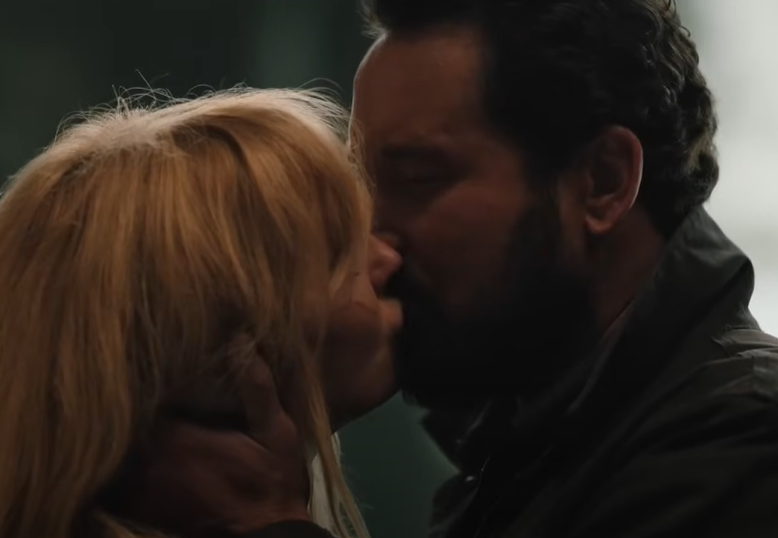
The scene culminates in a tender embrace, a physical manifestation of the emotional healing that just occurred. Rip pulls Beth close, offering silent comfort and reassurance. His final words to her are both a challenge and an act of love: “You need to find somebody new to fight or you’re going to sit around this house and you’re just going to beat the shit out of yourself.” He understands her destructive impulse, her need for an external target for her internal turmoil. He gently reminds her that her true enemy isn’t him, or others, but her own self-punishment. He acknowledges the pain she inflicted on him – “Okay. You did put me through hell, though. Yeah. Trauma, I know it’s yah. Ever last fucking inch of me” – but it’s not a rebuke, it’s an acknowledgment of shared experience, a recognition of the scar tissue they both bear.
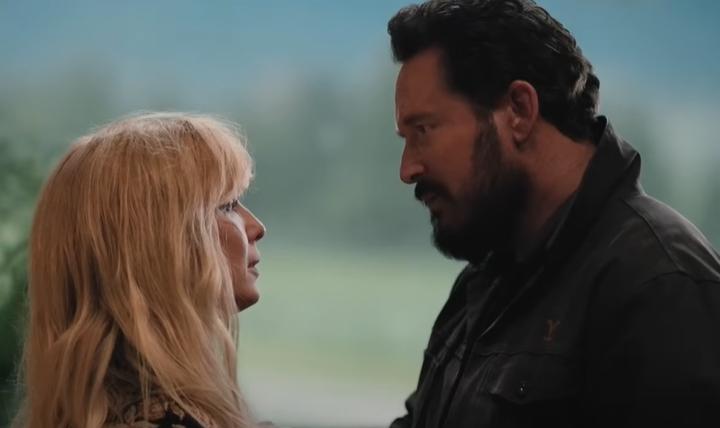
Rip’s ultimate goal for her, delivered with quiet intensity, is profound in its simplicity: “Let yourself be happy. That’s the goal for you today. I want you to find something that makes you happy. You do that for me?” It’s a plea for her to embrace joy, a concept Beth has long viewed as unattainable or undeserved. Her playful, yet telling, response – “Vodka makes me happy” – brings a brief moment of levity, hinting at her preferred coping mechanism. But her promise, “I promise. I will find something that makes me happy,” is a genuine commitment, spurred by Rip’s unwavering love and his profound desire for her well-being. The scene closes with a simple, yet powerful, “I love you. I’ll see you in a bit,” sealing their unique bond with a quiet promise of a future, together.
This emotionally charged scene between Beth and Rip is more than just a dramatic interlude; it’s a cornerstone of their narrative. It solidifies Rip’s role as Beth’s anchor, the only person capable of seeing and soothing her deepest wounds. It allows Beth a rare moment of genuine vulnerability, showcasing her capacity for remorse and her arduous journey towards self-acceptance. By facing their painful past together, Beth and Rip emerge stronger, their love fortified by honesty, understanding, and the profound realization that despite all the hell they’ve endured, their happiness together was always, truly, worth it. It’s a reminder that even in the darkest corners of “Yellowstone,” love, in its rawest, most imperfect form, can truly conquer all.