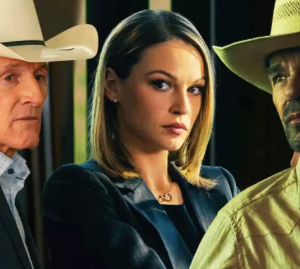
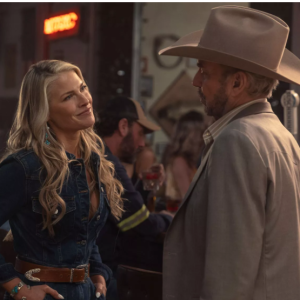
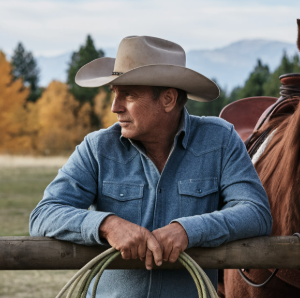
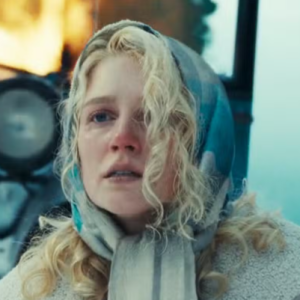
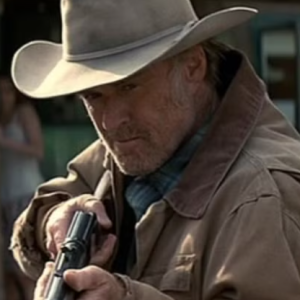
From the moment she first strode onto the sprawling canvas of the Yellowstone Dutton Ranch, Beth Dutton has been an electrifying, unapologetic force of nature. A corporate shark in designer clothes, a venomous viper to her enemies, and a fiercely loyal lioness to her chosen few, Beth has captured the collective imagination of millions. But who is the woman behind the hurricane? In an exclusive, unprecedented deep dive, the brilliant Kelly Reilly, who embodies this iconic character with breathtaking intensity, offers a raw, unfiltered look into the soul of Beth Dutton – a performance so immersive, fans often struggle to separate the actor from the beast.
“People come up to me and they’ll be, like, wanting to high-five me or start a fight,” Reilly reveals, a wry smile playing on her lips. “It’s really interesting how people believe that you’re your character.” This blurring of lines, she admits, is a testament to the visceral impact Beth has had, but it also underscores the profound commitment Reilly pours into her work. For the first time, she opens up properly about the intensely personal process of becoming Beth, acknowledging that her perspective on the character might differ wildly from the passionate fanbase’s unique ideas. “This character is a beast,” Reilly states unequivocally, a sentiment echoed by Beth herself: “I am the rock therapists break themselves against.”
Crafting the Cyclone: Reilly’s Odyssey to Beth
It’s a tale almost as legendary as the Dutton saga itself: Taylor Sheridan, the visionary creator of Yellowstone, instantly knew Kelly Reilly was his Beth. Yet, for Reilly, the journey to finding her wasn’t as immediate. “I didn’t know I was Beth,” she confesses, recalling the daunting challenge. “It’s like stepping into a sports car…how do I go from naught to 100 in three seconds?” Early doubts plagued her. “I had a wobble moment where I thought, ‘I don’t know if I can…I’m not sure I’m going to be able to pull this off.’” The role, she realized, was tremendously complicated, a tightrope walk over an abyss of pain and power.
Sheridan, however, became her unwavering guide, a midnight oracle filling her head with Beth’s complexities. “He would call me up at midnight and be like, ‘Here, here’s what you need to know about Beth,’” Reilly recounts, revealing she still possesses notebooks brimming with his insights. This intense collaboration forged Beth’s very essence, a character born from Sheridan’s bold vision and Reilly’s courageous dive. “I’m going off a cliff with her,” Reilly once told him, to which Sheridan famously retorted, “And I’m going to push you off that cliff.” Reilly knew then she was “in for a ride,” a ride that has proven to be as exhilarating for her as it is for the millions watching.
Part of that ride involved mastering Beth’s distinctive Montana accent. Reilly, a British actress, worked tirelessly with a dialect coach, immersing herself in the sounds of America. In the initial seasons, her dedication was so profound that she kept her true identity a secret from much of the crew. “I just didn’t talk to anyone unless I was playing Beth,” she admits, fearing that revealing her personal self, so far removed from Beth’s hardened exterior, would shatter the illusion she was painstakingly building. “I just needed to really become her.” It wasn’t until Season 3 that she began to fully interact with the cast and crew, having finally cemented Beth’s fierce, impenetrable persona within herself.
The Empress of Eloquence: Beth’s Unforgettable One-Liners
Beth Dutton doesn’t just speak; she delivers verbal assassinations, cutting down opponents with surgical precision and brutal honesty. Her one-liners have become legendary, quoted endlessly by fans, emblazoned on merchandise, and deeply embedded in pop culture. “I don’t speak B.S.”; “You are the trailer park. I am the tornado”; “You bet on the wrong horse” – these aren’t just lines; they are declarations of war. Reilly, who even bought a Beth T-shirt for her mother-in-law, marvels at their impact. “It’s very strange how she sort of pierced the psyche of American women.”
Despite Beth’s often monstrous tendencies, Reilly believes the character has “empowered a lot of women.” The fearlessness with which Beth articulates her rage, her desires, and her dominance, offers a cathartic release for audiences. “No one can come back at Beth better than her. I’m the bigger bear.” This unfiltered power, this ability to speak without fear of retribution, is undeniably compelling.
The Duality of a Dragon: Pain, Protection, and Peace
Playing Beth, Reilly admits, is “the most challenging role I’ve ever played.” The character is a thrilling paradox, a complex tapestry woven with threads of ruthless ambition and profound vulnerability. There’s the Beth who delivers searing one-liners, the “sting never fades” Beth, and then there’s the Beth who desperately seeks peace, who protects her father and the ranch, and who is fiercely in love. “There’s like these two warring parts this season vying for her attention,” Reilly observes, suggesting this internal struggle was on “steroids” in the recent season.
Beth’s core, however, remains steeped in pain and a desperate need for revenge. Her scenes, especially with her adoptive brother Jamie, are raw, brutal, and emotionally draining. “A lot of those scenes are really difficult to play because they’re so filled with pain,” Reilly explains, her voice heavy with the memory. The deeply toxic relationship, born from a devastating secret (Jamie’s role in her forced hysterectomy), is fueled by betrayal and an enduring love that curdled into hatred. “I didn’t ask you for a fking hysterectomy!” she once screamed at him, a wound that festers eternally. While Reilly hopes Beth finds peace, she acknowledges it can only come when the character truly deals with her profound, unresolved trauma.
The Anchor in the Storm: Beth and Rip, A Love Story for the Ages
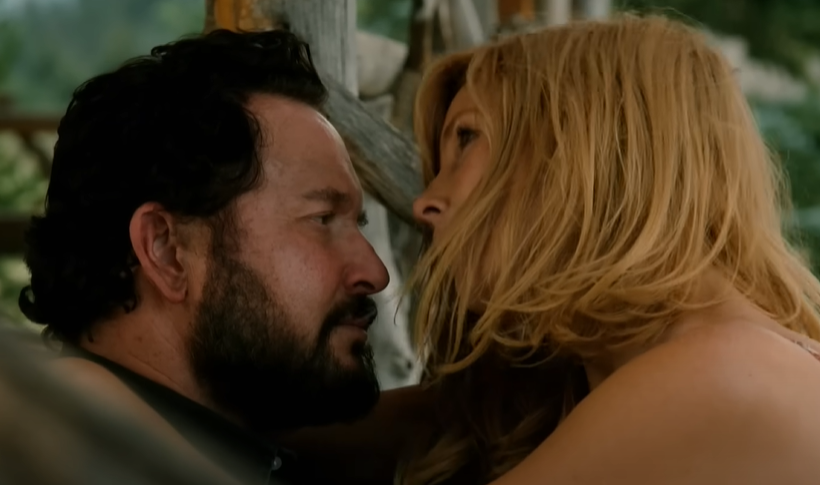
Amidst the chaos and darkness that defines Beth’s existence, there is Rip Wheeler. Their enduring, unconventional love story has become the beating heart of Yellowstone, a testament to the unparalleled chemistry between Kelly Reilly and Cole Hauser. “If we didn’t work together, there wouldn’t be any Rip and Beth,” Reilly states simply. Their on-screen connection wasn’t an immediate given, but by Season 2, the audience had spoken, and the phenomenon began.
Both Beth and Rip are “hard asses,” fierce and unyielding in their own ways. But when they come together, they lay down their weapons, revealing a vulnerability rarely seen. Their history, their shared trauma, and Rip’s unwavering devotion make their bond profoundly powerful. For years, Beth resisted the depth of her feelings, scarred by the past, but now, Reilly affirms, “this is just her guy.”
Reilly cherishes the moments where Rip brings out Beth’s softness, citing a scene where he simply makes her fried bread for breakfast. “How just simple an act of kindness can just set her into a very vulnerable place.” Cole Hauser, Reilly says, provides a safe space for her and Beth to soften, allowing the raw, passionate love to shine through. Their collaborative spirit off-screen, their mutual respect, and their shared understanding of the preciousness of their on-screen dynamic contribute to its magic. “It’s very rare for something to be written so beautifully and for the audience to respond to it this way,” Reilly reflects. Their love story, she says, is “almost old-fashioned” in its unwavering devotion: “The only thing I ask is that you outlive me so I never have to live another day without you.”
A Glimmer of Maternal Instinct? Carter and the Yellowstone Kitchen Table
The arrival of Carter, a troubled young boy who mirrors a young Rip, has introduced a new, complex dynamic into Beth and Rip’s lives. Beth, recognizing Rip’s own past in Carter’s eyes, feels a primal urge to protect him. Yet, Reilly is quick to remind us, “this is not Disney.” Beth’s own tumultuous upbringing means she’s not equipped for a “kumbaya moment.” Her heart, still guarded, struggles with the concept of mothering. “That’s going to be a slower burn than I think everybody may have wanted.”
Despite the slow, hesitant unfolding of Beth’s maternal side, moments of genuine happiness emerge, underscoring the deep importance of family to her. “When she’s not trying to destroy people, actually, this is what makes her heart sing,” Reilly reveals. This pursuit of peace and family is often tested at the infamous Yellowstone kitchen table, a crucible of memory and trauma for Beth. “It’s so full of ghosts for her,” Reilly explains, connecting the table to her mother’s death, her dead brother, and the dysfunctional dynamics that still haunt her. It’s where Beth often regresses to a “14-year-old hormonal child,” channeling her unresolved pain into destructive energy. However, Rip, ever the grounding force, offers a simple solution – move to a different table – hinting at a possibility of breaking free from the past. “I think that table’s going to be set on fire one day by her because she just can’t stand it,” Reilly quips, half-jokingly.
The Martyr’s Crusade: Unwavering Loyalty and Unforgiving Vengeance
Beth’s loyalty to her father, John Dutton, is absolute, verging on the pathological. “She really is a martyr for him,” Reilly asserts. “She says, ‘I will die defending his dream, protecting his land. His dream is my Alamo.’” This fierce devotion, born from the unresolved trauma of her mother’s death, which Beth blames herself for, drives her every action. “I don’t think she can forgive herself that.” This inability to forgive herself, and her father’s seemingly casual acceptance of the attacks on their family, fuel her insatiable thirst for vengeance.
This protective instinct, however, can spiral into savageness, as seen in her brutal interactions with Summer Higgins, John’s eco-activist love interest. “I spend a lot of time apologizing to the actors I work with,” Reilly admits with a laugh, describing Beth’s “awful” cruelty. This territoriality, coupled with her emotional arrested development, reveals a character still processing childhood wounds. “She probably needs to go and do some work on that,” Reilly muses, acknowledging Beth’s deep-seated dysfunction.
The Unstoppable Phenomenon: Working with Giants, Embracing the Wild West
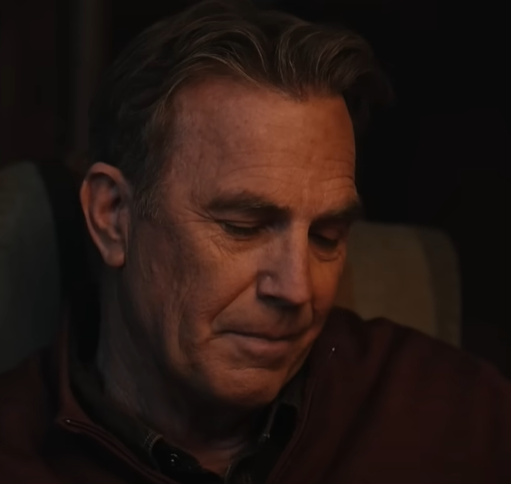
Working opposite Kevin Costner, an American icon, has been a “pleasure and privilege” for Reilly. She admires his stillness and rootedness, a stark contrast to her own “kamikaze” approach as Beth. Their on-screen dynamic, a core pillar of the show, reflects years of shared history and complex emotions.
Yellowstone’s stratospheric success, particularly its record-breaking numbers, has been “mind-blowing” for the cast, including Reilly, a South London native who never imagined herself starring in a number-one show in the middle of Montana. The show’s fan base is fiercely dedicated, drawn not only to Beth’s explosive persona but also to the rugged allure of characters like Rip and Kayce, who have become “sexy cowboys” for millions. Reilly notes Cole Hauser’s particular appeal: “He’s got a little toothpick and his little…it’s like the cowboy fantasy.”
As for the future, Reilly hopes Yellowstone continues for a long time, eager to see Beth and Rip evolve, perhaps even “in their 60s, on the porch.” She half-jokingly pitches a future where Beth gives up smoking for Nicorette, a small sign of her character potentially choosing happiness. But then she pauses, questioning: “I don’t know if that’s entertaining. You know, I don’t know if that’s what we want to see from her.” Because for all her vulnerability, all her pain, it’s the unfiltered, unapologetic, unpredictable force of Beth Dutton that truly captivates. As Beth herself so famously declared, a meteor strike might leave “me and the cockroaches running this sht tomorrow.” And after this profound conversation with Kelly Reilly, one thing is clear: Beth Dutton, in all her glorious, terrifying complexity, is here to stay.