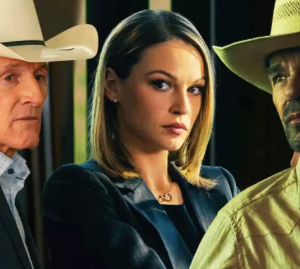
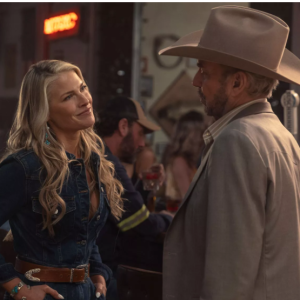
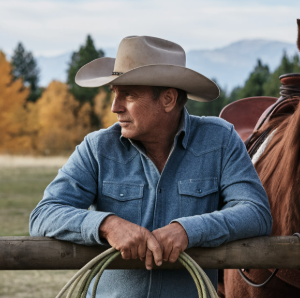
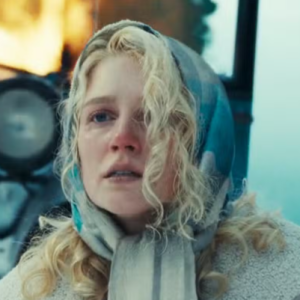
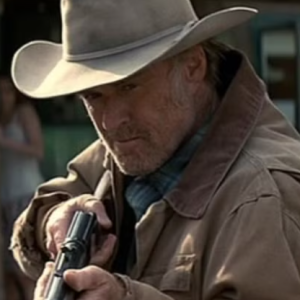
The world of Yellowstone, where the sprawling Dutton Ranch stands as the last bastion against the relentless march of modernity, entered a new, brutal chapter in its second season. Far from a mere continuation, Season 2 wasn’t just an escalation; it was a visceral exploration of the price of power, the bonds of blood, and the raw, uncompromising will to survive. As John Dutton famously declared, echoing an immutable truth of the American West: “You build something worth having, someone’s gonna try and take it.” And in Season 2, a legion of adversaries rose to claim their piece, forcing the Duttons to descend into a war unlike any they had faced before, transforming the very fabric of their family and solidifying their place as the most feared force in Montana.
The season opens with John Dutton confronting his own mortality. A ruptured ulcer, initially misdiagnosed as colon cancer, forces him to stare into the abyss. This near-death experience serves as a stark catalyst, intensifying his resolve to secure his legacy. “You know there’s being scared to die,” he reflects, “then you realize you’re not gonna die and now you gotta face all them decisions you made.” For John, those decisions revolve singularly around the future of his ranch and his family. With time seemingly running out, he sees the encroaching threats with renewed urgency.
Initially, the primary antagonists remain the unlikely duo of casino magnate Dan Jenkins and Broken Rock Indian Reservation Chairman Thomas Rainwater. Their proposed casino, strategically placed against the Dutton property line, symbolizes the encroaching urban sprawl and the enduring conflict over land and sovereignty. Rainwater’s shrewd maneuver to reclaim ancestral land by declaring it a sovereign nation’s property sets a legal precedent that shakes the foundations of state authority. This dynamic, fraught with tension yet underpinned by a grudging respect, foreshadows an even darker alliance born of necessity.
The Dutton children, each battling their own demons and vying for their father’s fractured approval, found their roles redefined by the escalating war. Jamie Dutton’s trajectory was perhaps the most tragic and isolated. Groomed by John to enter politics, his campaign for Attorney General became a crucible, revealing his deep-seated insecurities and susceptibility to manipulation. His eventual withdrawal from the race, orchestrated by John to protect the ranch, culminated in a devastating interview where he publicly disavowed his family. This act of betrayal, designed to distance himself from the Dutton name, instead forged an irreparable chasm between him and his siblings, especially Beth, who wielded her contempt like a sharpened blade. “You should have thought of that before you took the brand,” she spits at him, highlighting the indelible mark of family loyalty he seemingly cast aside.
Beth Dutton, meanwhile, remained the family’s sharpest blade, her razor-sharp wit and ruthless business acumen serving as the ranch’s impenetrable shield. Her loyalty to John was absolute, a visceral, unyielding force that manifested in her brutal efficiency against any perceived threat. Yet, Season 2 also deepened her most vital relationship: her fierce, undeniable love for Rip Wheeler. Rip, the ever-loyal foreman, continued to embody the unwavering devotion John craved. John’s poignant declaration, “A lot of ways you’re the only person I can trust, Rip, because you’re the only person that doesn’t benefit when I’m gone,” underscored Rip’s unique position and foreshadowed John’s ultimate decision to name him an heir. Their bond became a beacon of stability amidst the chaos, culminating in Beth’s raw, vulnerable “I love you” – a moment of profound emotional intimacy in a world otherwise devoid of softness.
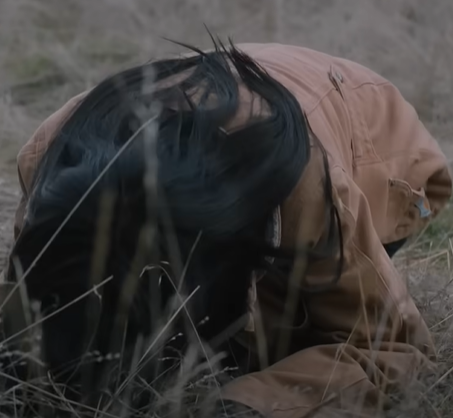
Kayce Dutton, long wrestling with his identity and allegiances between the ranch and his wife Monica, found himself increasingly pulled into the orbit of the ranch’s defense. His innate capacity for violence, tempered by a desire for a normal life, proved indispensable. He stepped into a leadership role, becoming John’s de facto enforcer, executing orders with a quiet, lethal efficiency that solidified his place as the future of the Yellowstone. His strained relationship with Monica, marred by the constant threat of the ranch’s lifestyle, remained a core emotional anchor, as they desperately tried to rekindle their bond amidst the gathering storm. “I don’t know how to not be with you,” Kayce confesses, highlighting the deep, enduring love that defines their volatile connection.
But the true architects of chaos, the season’s chilling new antagonists, arrived in the form of Malcolm and Teal Beck. These brothers, seemingly legitimate businessmen, quickly revealed themselves as ruthless, psychopathic kingpins who operated with impunity, their ambition fueled by a thirst for absolute control over Montana. Their methods were cold, calculated, and horrifying: extortion, intimidation, and a casual disregard for human life. Their declaration, “We just want to be feared,” was no idle boast; it was a promise.
The Becks’ calculated terror began with the mutilation and burning of Dutton cattle, a horrific act designed to cripple the ranch economically and psychologically. This brazen aggression forced John Dutton to reassess his strategies. Recognizing the Becks as a common, existential threat, he forged an uneasy truce with Thomas Rainwater and, surprisingly, even with Dan Jenkins. This fragile alliance, driven by a mutual enemy who “doesn’t play fair,” proved crucial, though short-lived for Jenkins, who met a gruesome end at the hands of the Becks – strung up on his porch as a macabre warning.
The Becks’ depravity reached a new, horrifying zenith with their attacks on the Dutton family themselves. Beth endured a brutal, traumatizing assault in her office, a harrowing scene that underscored the sheer savagery of their foes and left indelible scars. But the ultimate act of desecration, the unforgivable sin, came with the abduction of John’s grandson, Tate. This act propelled the Duttons beyond the bounds of law and order, igniting a primal, unbridled fury that promised total annihilation.
The season culminated in a relentless, unforgiving hunt for the Beck Brothers. This wasn’t justice; it was a primal reckoning. John, Kayce, and Rip, alongside a contingent of ranch hands and even Rainwater’s men, meticulously tracked and eliminated the Becks. Kayce, in particular, proved his mettle, embodying the lethal precision required for such a brutal task. The rescue of Tate, found traumatized and stripped of his innocence, was a moment of profound relief, but it bore the indelible marks of the conflict, a stark reminder of the cost of their victory.
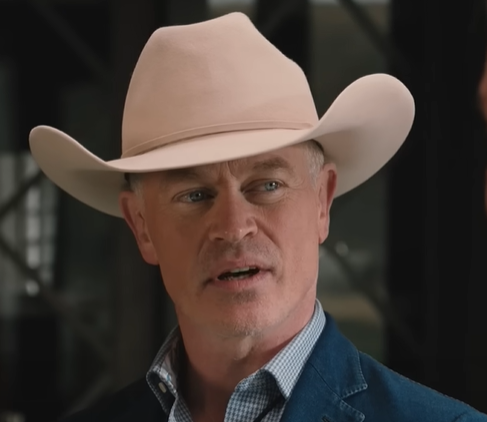
Yellowstone Season 2 was a masterclass in escalating stakes, pushing the Duttons to the very edge of their moral and physical limits. It solidified their identity as a family forged in conflict, bound by a loyalty that transcends legal and ethical boundaries. The ranch wasn’t just land; it was a living entity, a symbol of their heritage, and its defense demanded an uncompromising, often brutal, commitment. The season closed with the Duttons victorious, the immediate threat neutralized. The land was secure, for now, but the cost had been immeasurable. The question lingered: what new enemies would emerge from the blood-soaked soil, and how much more could the Dutton family endure before their relentless war consumed them from within? The fight for the soul of Montana, and the future of the Dutton legacy, had only just begun.