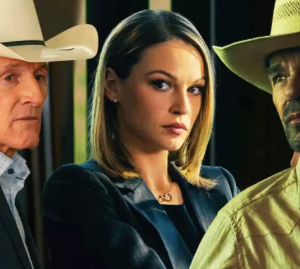
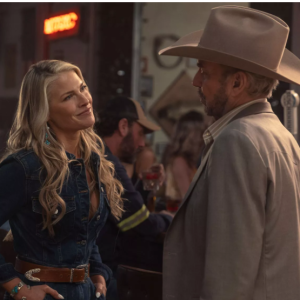
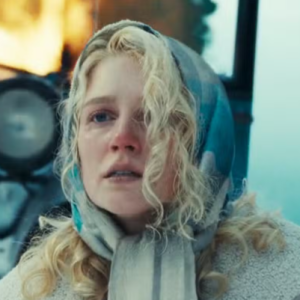
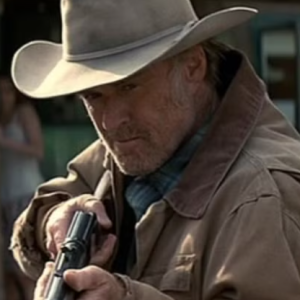
Yellowstone, Taylor Sheridan’s sprawling neo-Western saga, has captivated millions with its high-stakes drama, breathtaking landscapes, and complex characters. While the show boasts a passionate fanbase, not every resident of the Dutton Ranch, or those orbiting its tumultuous sphere, has garnered universal affection. In fact, a significant number of characters have become targets of audience frustration, transitioning from potentially beloved figures to sources of exasperation, or simply failing to resonate positively from the outset. This phenomenon of “loving to hate” or simply “hating” certain personalities speaks volumes about the show’s ability to provoke strong reactions, even if those reactions are often negative.
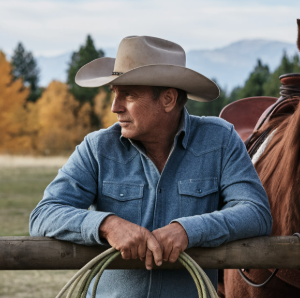
Perhaps the most prominent example of a character whose perception shifted dramatically is John Dutton III, the patriarch of the Yellowstone Ranch, brilliantly portrayed by Kevin Costner. Initially, John embodied the stoic, principled rancher fighting to preserve his family’s legacy. However, as the series progressed, his character arc spiraled into one that many viewers found increasingly aggravating. His relentless pursuit of the ranch’s preservation often revealed a deep-seated greed, profound selfishness, and a cruel streak, particularly towards his own children. John frequently presented himself as a good man, driven by pseudo-nostalgia and familial pride, yet his actions consistently betrayed this facade. He mistreated his offspring, endangered his family through reckless decisions, and stubbornly clung to power, justifying every questionable move with a self-righteous conviction. Unlike other characters who might elicit sympathy despite their flaws, John Dutton’s refusal to acknowledge his own culpability or to genuinely seek redemption left many viewers feeling he became progressively worse, making him the ultimate love-to-hate figure for his infuriating hypocrisy.
Beth Dutton, John’s only daughter and the formidable wife of Rip Wheeler, stands as another morally ambiguous figure who divides audiences sharply. Her character is a whirlwind of chaos, sharp wit, and often over-the-top insults. While some fans laud her fierce loyalty to her father and Rip, and her unapologetic embrace of her own flaws, others find her actions profoundly frustrating. Beth’s volatile temperament and destructive tendencies can make her a difficult protagonist to empathize with, particularly in the earlier seasons where her vindictiveness often overshadowed any underlying vulnerability. Despite the annoyance she can cause, especially with her propensity for dramatic outbursts, the series would undoubtedly feel incomplete without her. Beth’s growth, however incremental, in tandem with the unfolding seasons, offers glimmers of complexity that prevent her from being entirely written off by the audience, solidifying her place as a character people begrudgingly admire.
In stark contrast to the complexities of the adult Duttons, Tate Dutton, Kayce and Monica’s son and John’s sole grandson, has been widely criticized for his lack of character development. Despite being the generational link to the Dutton legacy, Tate often feels like a narrative prop rather than a fully fleshed-out character. His emotional scenes, often teary-eyed moments with John or Kayce, primarily serve to highlight the softer sides of these male figures or to explain their motivations, rather than building Tate’s own personality. He rarely interacts with characters beyond his immediate family, showing little concern for the deaths or departures of other relatives. This stagnant portrayal, coupled with scenes that felt designed purely for emotional manipulation, led many viewers to grow weary of his presence, seeing his storylines as largely pointless.
Then there are characters whose very existence in the narrative felt tangential or outright irritating. Christina, Jamie’s ex-girlfriend and mother of his son, falls into the category of “completely irrelevant.” Her sporadic appearances and limited impact on Jamie’s already convoluted storyline meant she struggled to gain any meaningful traction with the audience, often feeling like an unnecessary complication rather than a compelling addition.
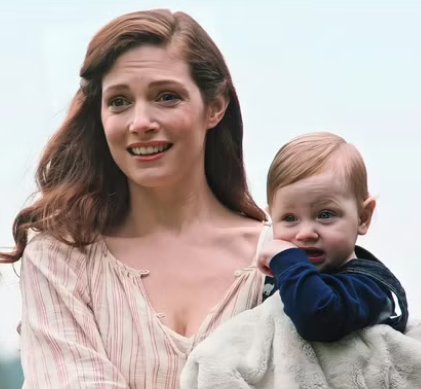
Similarly, Travis Wheatley, the professional horse trainer portrayed by Taylor Sheridan himself, quickly got on viewers’ nerves. Despite appearing only a handful of times, Travis is presented as an idealized self-insert: handsome, clever, talented, and seemingly indispensable, having “saved the Yellowstone ranch several times.” This almost caricatured perfection, combined with his minimal but impactful presence, struck many as a self-congratulatory portrayal that felt unearned and broke the immersion for some fans, solidifying his status as an irritating, if minor, character.
Monica Long-Dutton, Kayce’s wife, is arguably one of the most universally disliked characters. Fans often perceive her as whiny, intensely dramatic, and a disruptive force within the established Western dynamic of the show. Her storylines frequently diverge from the ranching escapades that many viewers tune in for, instead focusing on her life path as a professor and her personal struggles. While this could offer a valuable counterpoint to the Dutton lifestyle, it often frustrates fans who desire more core ranch activities, leading to the feeling that Monica’s presence pulls the narrative away from its central premise, making her difficult to root for.
Jamie Dutton, John’s adopted son and the ranch’s lawyer and political figure, represents a frustrating case of squandered potential. His character development is notoriously inconsistent, vacillating between attempts at villainy and pathetic displays of daddy issues. He never fully commits to becoming a compelling antagonist nor does he manage to redeem himself into a sympathetic figure. Jamie remains perpetually stuck as a boy defined by his troubled relationship with John, constantly manipulated and rarely growing into anything substantial. This uncommitted portrayal, compounded by a convoluted storyline involving ex-girlfriends, lost sons, and biological fathers, made his character arc irritatingly indecisive and a source of constant frustration for the audience.
Introduced in the fourth season, Summer Higgins, the environmental activist who becomes involved with John Dutton, clearly overstayed her welcome for many. She was often seen as a poor representation of activism, exhibiting a perceived lack of intelligence, common sense, and moral strength. Her arguments against industrialized farming, particularly the Duttons’ practices, frequently demonstrated a fundamental misunderstanding of the ranch’s operations, often making John Dutton appear surprisingly sensible in contrast. Her relationship with John felt forced, and her petty conflict with Beth was widely criticized as a contrived attempt to pit women against each other, cementing her place as an unnecessary and annoying addition.
Walker, the former convict turned ranch hand and pseudo-bohemian cowboy, was often dismissed as a boring side character with little to offer. Initially forced into the Duttons’ service against his will, his character never truly evolved. His storylines often lacked significant stakes, revolving around his occasional guitar playing and casual romantic entanglements. While his presence occasionally highlighted the darker, more ruthless methods of the Duttons, many viewers felt his arc was dull and his continued, often unwilling, presence at the ranch raised questions about the Duttons’ questionable methods of retaining employees.
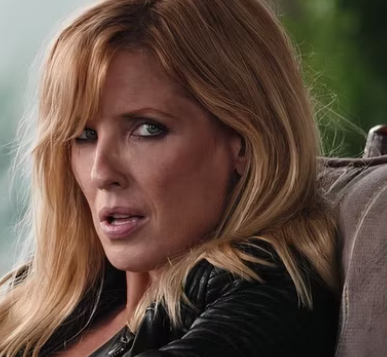
Finally, Mia, the rodeo barrel racer and Jimmy’s girlfriend, stirred up considerable negative sentiment. She quickly created problematic dynamics in the bunkhouse and was seen as a disruptive influence. Her encouragement for Jimmy to return to the rodeo, directly leading to his severe injury, and her subsequent abandonment of him when he left for the 6666 ranch, painted her in a very negative light. For a character who was secondary to the main plot, Mia received a disproportionate amount of attention, and her perceived selfishness and negative influence made her an exceptionally disliked figure, seen by many as an awful partner for Jimmy.
In sum, the world of Yellowstone is populated not just by heroes and villains, but by a compelling array of characters who, for various reasons—be it frustrating decisions, stagnant development, or simply grating personalities—have become central to the viewing experience, albeit often by provoking ire rather than adoration. These divisive figures, whether loved to hate or simply deemed irritating, undeniably contribute to the show’s intense emotional resonance and its continued grip on its audience.