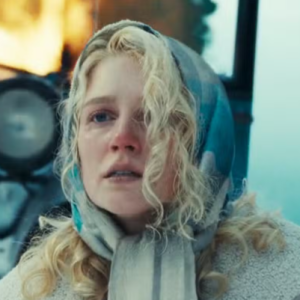
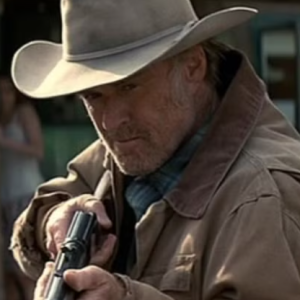
Informed profoundly by a lifetime of hard-won battles and significant personal loss, John Dutton, the stoic patriarch of the Yellowstone Ranch, consistently shares sentiments that resonate with the weight of an oracle throughout the acclaimed series. His profound insights and unvarnished wisdom serve as a guiding compass for his family as they navigate the treacherous, high-stakes circumstances threatening their ancestral lands. More than just counsel, a particular line uttered by Beth (Kelly Reilly) and Kayce’s (Luke Grimes) father in the very first episode, “Daybreak,” stands as a quiet yet powerful prophecy, subtly forecasting the unrelenting struggle that would define the entire narrative of Yellowstone.
The pivotal moment unfolds early in the series premiere when John’s fiercely loyal daughter, Beth, makes her anticipated return to the Dutton Ranch, relocating from Utah with the singular purpose of aiding her father in his relentless endeavor to protect their sprawling estate. From the outset, Beth’s devotion to her father and the land is made unequivocally clear: she is prepared to do whatever it takes to preserve the ranch, even if that means abandoning her own financial instincts or confronting formidable adversaries head-on. Her loyalty is starkly displayed when she turns to her father and asks, with an almost desperate determination, “Just tell me who to fight.” John’s one-word response, delivered with the weary certainty of a man who understands the world he inhabits, becomes the bedrock of the series’ overarching conflict: “Everyone.”
This seemingly simple directive quickly manifests into a brutal reality. The very first episode sees a range war erupt, culminating in the tragic death of John’s eldest son, Lee Dutton. This immediate, devastating loss solidifies John’s grim understanding of the gravity of their situation, confirming that his fight for survival is not against a single entity but against a relentless tide of diverse antagonists. Early on, these adversaries take distinct forms: Thomas Rainwater (Gil Birmingham), the principled chairman of the Broken Rock Reservation, seeks to reclaim what he views as his people’s ancestral land, envisioning a new casino and the repurchase of Paradise Valley. Simultaneously, Dan Jenkins (Danny Huston), a ruthless real estate developer, intends to carve out a luxury vacation community, posing a direct threat to the Duttons’ traditional way of life. These initial clashes served as a stark preview, demonstrating that the Dutton family was indeed embroiled in a multi-front war, enduring the throes of a conflict that spared no one.
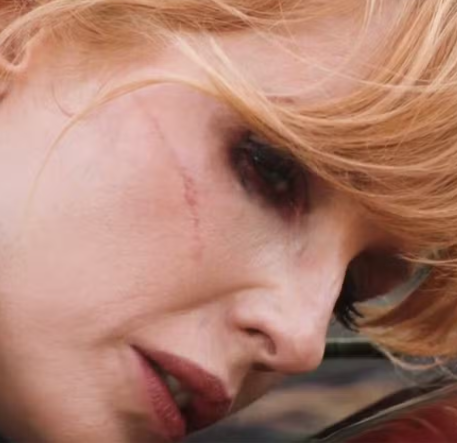
As the series progresses, the scope of “everyone” expands exponentially, introducing more insidious and powerful forces. The Duttons find themselves up against the terrifyingly brutal Beck Brothers, a pair of criminal entrepreneurs who employ utterly ruthless tactics, including violence and intimidation, to assert their influence. Later, the formidable Market Equities, a massive corporate conglomerate led by figures like Caroline Warner and Ellis Steele, emerges as arguably the most existential threat. Their ambition to develop the land for profit, wielding immense financial, legal, and political power, represents the relentless march of modernity and corporate greed against the Duttons’ deeply entrenched traditions. This diverse array of enemies – from Indigenous claims and capitalist developers to criminal syndicates and corporate behemoths – consistently validates John’s initial prophecy. The Duttons navigate a labyrinth of legal battles, political maneuvering (culminating in John’s reluctant governorship), financial assaults, and direct, often brutal, physical confrontations, illustrating that their fight for survival is a ceaseless, multifaceted campaign.
Central to this relentless struggle is Beth Dutton, whose role, initially understated in the premiere, rapidly escalates as the series unfolds. She transforms from a prodigal daughter into John’s indispensable right hand, the strategic and often ruthless architect of the family’s defense. Her unique blend of financial acumen, razor-sharp wit, and unwavering, almost fanatical, loyalty makes her a formidable weapon in the Duttons’ arsenal. Beth fearlessly confronts rivals, manipulates markets, and employs unconventional tactics to dismantle corporate threats and protect the ranch’s economic viability. Her personal demons, born from past traumas, often fuel her relentless aggression, making her a character who genuinely embodies the “fight everyone” ethos. Her strategic brilliance, combined with her capacity for shocking brutality, ensures that the Duttons remain a force to be reckoned with, even against seemingly insurmountable odds.
Alongside Beth, Rip Wheeler (Cole Hauser), the ranch’s steadfast foreman and John’s surrogate son, serves as the unwavering enforcer of the Duttons’ will. His loyalty to John and the family is absolute, forming the bedrock of the ranch’s operational defense. Rip embodies the physical and often brutal necessity of the “fight,” executing John’s directives with cold, efficient precision. He leads the ranch hands, a fiercely loyal crew who adhere to a code that often transcends conventional law, willing to go to extreme lengths to protect their home and their patriarch. His actions complement Beth’s strategic maneuvers, forging a formidable partnership that ensures the Duttons can meet any threat, whether through cunning or direct confrontation. Together, Beth and Rip represent the dual nature of the Dutton family’s fight: the sophisticated, intellectual battle waged by Beth, and the visceral, uncompromising defense carried out by Rip.
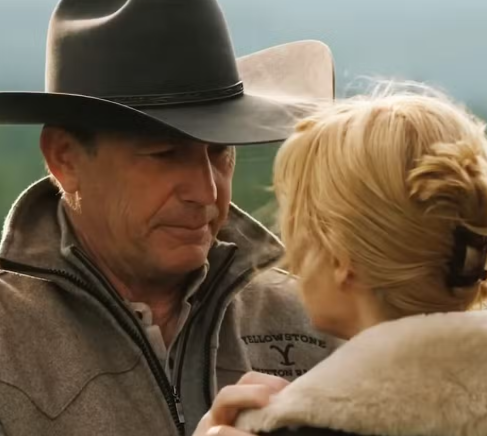
At its thematic core, the constant “fight” in Yellowstone is far more than a mere struggle for land ownership; it is a desperate, existential battle for the preservation of a way of life, a legacy spanning generations, and the very identity of the Dutton family. The series masterfully explores the inherent conflict between tradition and modernity, the raw beauty of nature against the relentless march of development. This relentless struggle, however, comes at a profound personal cost to every member of the Dutton family. Jamie grapples with his identity and morality, often torn between his ambition and his bloodline. Kayce struggles with his dual loyalties to his family and the reservation, seeking a path that might reconcile the irreconcilable. Monica faces the constant challenge of adapting to a world so alien to her own, while still striving for peace. The violence and defense that define the Yellowstone universe create a cyclical narrative, illustrating that for the Duttons, peace is a temporary reprieve, and the fight is an enduring state of being.
John Dutton’s seemingly casual remark in the premiere episode has, with remarkable accuracy, proven to be the definitive prophecy for the entire Yellowstone saga. Every season, every adversary, and every sacrifice reinforces the truth of his words. As the main series draws to a close, Beth Dutton’s prominence is set to continue as she, along with Rip, will headline an anticipated Yellowstone spinoff. It remains to be seen if they will face “everyone” in the same relentless fashion, but given the foundational themes instilled by John Dutton and the deeply ingrained nature of the conflict, it is highly probable. His profound philosophy, steeped in the necessity of ceaseless defense, has profoundly shaped Beth and Rip, ensuring that even in John’s physical absence, his prophetic warning will continue to define the enduring, relentless fight for the Yellowstone Ranch. The prophecy defines not just the original series but the entire Yellowstone narrative universe, promising an ongoing saga of relentless defense against a world determined to claim what the Duttons hold most dear.