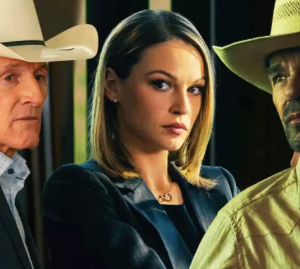
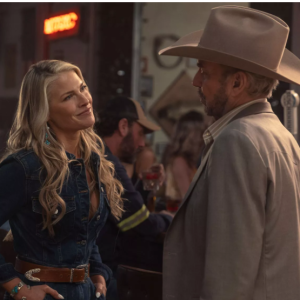
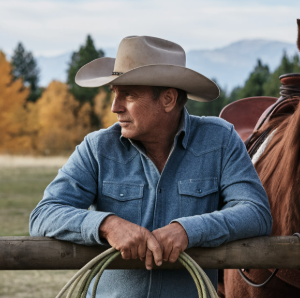
The sprawling, untamed world of “Yellowstone” has always thrived on the razor’s edge of survival, but as fans eagerly await the return of the Dutton saga, a recent “Stories from the Bunkhouse (Bonus) | Where We Left Off” special on Paramount Network offered a chilling glimpse into the unprecedented peril facing America’s most iconic ranching family. Far from the usual behind-the-scenes camaraderie, the reflections from fan-favorite bunkhouse actors revealed a narrative on the brink of implosion, where the Yellowstone Ranch, once an impenetrable fortress, finds its very foundations crumbling under the weight of internal betrayals and scattered defenses.
The discussion, featuring Ian Bohen (Ryan), Denim Richards (Colby), and Jefferson White (Jimmy Hurdstrom, though now departed the bunkhouse), underscored a profound shift in the series’ established dynamics. “We were kinda scattered to the wind,” Jeff White observed, articulating the profound vulnerability now gripping the Dutton empire. The once-unified front is fractured, its forces dispersed, and its future more uncertain than ever before.
The Great Dispersion: A Ranch Left Vulnerable
At the heart of the immediate crisis lies a devastating outbreak of brucellosis amongst the Yellowstone’s prized cattle. This biological threat necessitates a drastic, almost unthinkable measure: the relocation of a massive herd to the distant pastures of the 6666s Ranch in Texas. What might appear as a practical solution quickly transforms into a symbol of the Duttons’ stretched security. With their “major enforcer,” Rip Wheeler (Cole Hauser), leading the arduous cattle drive, accompanied by loyal hands Ryan, Walker, Jake, and Teeter, the Yellowstone ranch is left dangerously exposed.
“When you start stretching the security that you have, you inevitably develop holes,” one of the actors sagely noted, reflecting on the prophetic warnings of earlier seasons. The ranch, for generations the Dutton family’s bastion of safety, their “fortress,” now stands with its “forces outside the castle walls, spread all over the place.” This physical dispersion is more than logistical; it’s a strategic weakening, inviting threats that the family, for the first time in its storied history, may be too thinly spread to counter effectively. Rip’s departure, though born of necessity and unwavering loyalty, leaves a vacuum that no one else can truly fill, amplifying the sense of dread surrounding the vulnerable home front. The journey south itself promises new challenges and perhaps, entirely new adversaries, hinting at the potential for fresh blood and fresh conflicts in the vast, unforgiving landscape of Texas.
Jamie’s Deadly Alliance: The Serpent in the Family
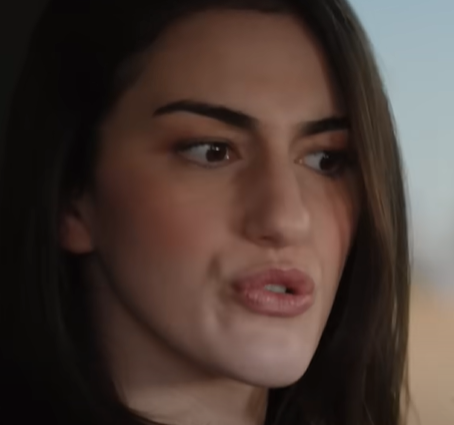
While Rip and the bunkhouse crew navigate the dusty trails of Texas, the most insidious threat to the Duttons brews much closer to home, within the very heart of the family. Jamie Dutton (Wes Bentley), perpetually torn between his innate loyalty and his yearning for independence, has finally crossed the rubicon of no return. His new paramour, Sarah Atwood (Dawn Olivieri), has proven to be a master manipulator, a seductive siren who has successfully woven a web of deceit around Jamie, exploiting his deepest insecurities and desires.
“Sarah is so seductive that she’s got Jamie in a sort of hypnotic trance,” the actors mused, dissecting the chilling dynamic. Atwood has weaponized Jamie’s greatest strength—his twisted sense of loyalty to the ranch—turning it against him. By convincing him that the only way to “save” the Yellowstone is to eliminate its patriarch, John Dutton (Kevin Costner), she has steered him towards patricide. The show’s narrative has systematically stripped Jamie of every alternative path to happiness or self-actualization, from Beth (Kelly Reilly) ruthlessly destroying his political career to severing his connection with his biological father. The arrival of Sarah Atwood, offering a mirage of love and validation, became the final push. The shocking revelation that Jamie and Sarah are now “committing to killing John Dutton” reverberated through the bunkhouse, a stark acknowledgment of the ultimate betrayal that will define the coming conflict. This isn’t just political maneuvering; it’s a declaration of war from within, promising a family civil war that could shatter the Dutton legacy irrevocably.
Beth’s Dark Revelation: The Price of Dutton Justice
Perhaps the most visceral and morally challenging revelation for the audience, and indeed for Beth Dutton herself, came with her horrifying discovery of “the train station.” This macabre term, a euphemism for the remote canyon where the Duttons dispose of their enemies, unveils the brutal, undeniable truth about the family’s methods of maintaining power. For Beth, a woman who thrives on calculated destruction and revels in orchestrating the downfall of her adversaries, this moment is a profound personal reckoning.
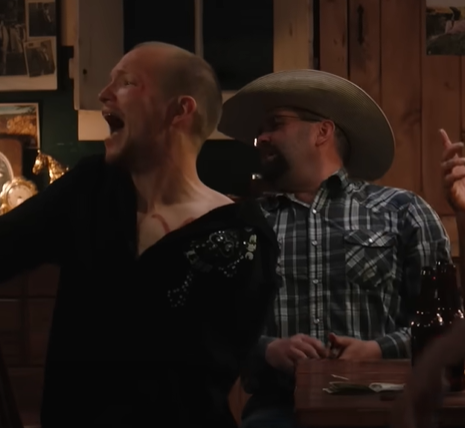
“She’s never murdered anyone,” the actors clarified, distinguishing Beth’s brand of vindictiveness from the cold-blooded acts of her father and husband. While Beth excels at “putting people in situations the only solution to which is death,” she has never personally pulled the trigger or shoved a body off a cliff. The realization that John and Rip, the two men she loves and respects most, are direct participants in these grim rituals forces a searing introspection. “This is what I come from. This maybe is what I am. Can I go this much farther? Is that who I am?” This internal conflict promises to propel Beth into even darker, more ruthless territory, blurring the lines between justice and savagery. The “train station” is not just a family secret; it’s a mirror reflecting the depths of violence inherent in their world, hinting that the “terms of the conflict are lethal” and “nothing off the table” for any side.
The Unraveling Unity: What Does the Future Hold?
The cumulative effect of these plot developments is a palpable sense of disunity and uncertainty. The show’s iconic opening refrain, “The Dutton family’s legacy is this land,” has never felt more precarious. With their forces scattered, their “major enforcer” absent, and their own blood planning a coup, the future of the Yellowstone Ranch and the Dutton legacy itself hangs in the balance.
“What’s gonna happen to the ranch? Is there an opportunity to bring all this back together? I don’t know. I don’t see what that looks like,” an actor admitted, echoing the anxieties of millions of viewers. The unity that has been a hallmark of the Duttons, however flawed, is dissolving. The precariousness of their situation is unprecedented, leading to a suspenseful query: “Truth prevails,” or “The truth won’t win this one”? In the brutal world of “Yellowstone,” the latter seems disturbingly plausible.
Bunkhouse Banter: A Glimpse Behind the Grit
Amidst the intense discussions of looming peril, the bunkhouse segment also offered lighter, fan-focused moments, providing a welcome respite and reinforcing the cherished camaraderie among the cast. When asked which Dutton would make a permanent bunkhouse member, the consensus leaned towards Kayce (Luke Grimes), lauded for his grounded nature and easygoing presence, a stark contrast to Jamie, whose prior bunkhouse stint was hilariously remembered as “terrible when he’s drunk.” The playful debate over fighting a “bear-sized duck or a dozen duck-sized bears” (with the unanimous, if absurd, preference for the latter) offered a glimpse into the actors’ off-screen dynamic, proving that even amidst dramatic narratives, humor finds a way. And, of course, no bunkhouse session would be complete without a query about Jefferson White’s posterior, confirming its continued “comeback every damn day” – a testament to the show’s unique blend of high drama and irreverent charm.
As “Yellowstone” prepares for its next chapter, the stage is set for a climax that could redefine the Dutton legacy forever. The family faces not just external land grabs and political machinations, but the corrosive forces of internal betrayal and the harrowing consequences of their own brutal methods. The ranch stands vulnerable, its defenders dispersed, and its future teeters on the precipice of an all-out war – a war that promises to be the most dramatic, and potentially tragic, in “Yellowstone” history. Fans, like the actors themselves, can only brace for impact, uncertain of what, if anything, will be left standing when the dust finally settles.